
Dear Monica Lewinsky
book written by Julia Langbein
Dear Monica Lewinsky has one of the most scorching openings in recent memory. If the following prologue doesn’t crank your “must read” dial past its maximum, we are very different people (and that’s fine, but henceforth prepare to get less useful information).
This was the mortification of Monica Lewinsky at the hands of the most powerful lawmakers during the height of the American Empire. And for many years, she could not show her face, for her body bore its mortification, and she carried her name like a dirty joke, and she moved countries, but there was no country that word of her body’s defilement had not reached.
But more years passed, and while the same factions continued to fight, and lustful Brett was now one of the highest judges in the land and still under the guise of Christian virtue sought to shame and cause physical suffering to women, America began to feel great remorse for the mortification of Monica Lewinsky. And the former emperor knew it and he began to fast, to foreswear meat and cheese as if to say, I have no more desire, I have mastered my appetites, I too will mortify my flesh. And he lost so much weight that he looked like a blanched femur someone found in the desert and he talked like a ghost sheep and all the saliva he did not spend on meat stayed in his mouth and formed a mousse and nobody wanted to listen to him anymore. And Monica Lewinsky became exalted as the patron saint of those who suffer venal public shaming and patriarchal cruelty, and she forgave the people with what they recognized as true grace, and they exalted her and looked anew upon her beautiful glossy dark hair and said things like “I saw Monica Lewinsky on The Today Show. She’s so smart.”
Saint Monica Lewinsky was consecrated by the collective force of the American conscience during the second decade of the third millennium AD. At is said that many women pray to her and that she is known to perform miracles.
Where are we going after this? What will this book even be? Will Dear M.L. continue its bracing faux-liturgical styling? Is this even liturgical? Will we get a collection of short stories like spokes radiating out from the central concept of praying to St. Monica that follow a handful of diverse women? Perhaps each section will allow us to hear of various wrongings and follow them to their eventual rightings?
When I was in either the last year of Junior High or possibly early on in High School, I took either an advanced or non-required English course. I simply cannot square my memories of what the room looked like or the age of the other students with me, but I recall being in this small non-standard classroom after I had spent the summer smashing through big sweeping fantasy series. And since simply reading large books felt like an accomplishment, I imagine I was quite young indeed.
In the opening class everyone was asked what their favorite book was, and this moment I do remember. Mine was, of course, the 800-page monster, The Mists of Avalon (we will not speak of the other alleged monstrousness surrounding that novel) which I had recently finished. This was in school, though–books were supposed to be academic, smart-seeming. Additionally, not only was Mists of Avalon fantasy (embarrassing; dorky), it was girl-coded (emasculating; gay [1990s pejorative]). As a non-sports boy who was somewhere between 12 and 14 in a sub-to-exurban township, these were all labels I was already battling.
And so, even knowing I would disappoint the formative bedroom-door bumpersticker of my older sister that unveiled unto me the truth that Feminism is the Radical Notion Women are People (obvious; sadly necessary), and in a move that harked back to the days where I would quickly switch the channel lest someone catch me watching Clarissa Explains it All (girl protagonist; delightful), I couldn’t bring myself to tell the class that my favorite book was a dense gay feminist mythological retelling. I think I said Great Expectations, even though that is no preteen-to-teen’s favorite book, ever. It was just, like, a thing we read in school, probably.

still seems great

still the coolest

these were my three holy texts, the first Lilith Fair was my pilgrimage (sincerely, I was there).
The structure of Dear M.L. is not a collection of wronged women airing their grievances but the comprehensive tale of Jean, an adult who is narrating the mortification of teen Jean (who is in school but past Great Expectation age) to Monica Lewinsky. Monica Lewinsky, who functions as the ghost of study-abroads past—
“Monica, tell him.” I look around frantically. I listen, my eyes scouring the room for a sign.
“Monica? Who’s Monica?”
“Monica Lewinsky.”
“Monica Lewinsky lives in California, Jean. You don’t know her.”
“No, no, not the human lady. The all-powerful numen they created when they tried to destroy her.”
–is able to It’s a Wonderful Life’s Jean back to when she was nineteen and in France and had sex with her professor.
“You don’t know the truth.”
“No, I know. I’ll tell you the truth: I was a hormonal idiot on a study abroad course. I was naive, and I was had.” Of course that’s it. The words from his email come back to me: such a treat.
Heads up to you, there are going to be a lot of pull quotes. Because this book is really good. The story is good. The writing is good. You gotta read it to get it. So there will be a lot of quotes. I don’t engage in eyeball-tracking metrics or anything so I can’t say for sure but I think most people kind of glaze over some nice long block quotes. Tough tooties, I’m going to come back and read this and think, “Hell yes, this was a good book, I love all those things I typed out.”
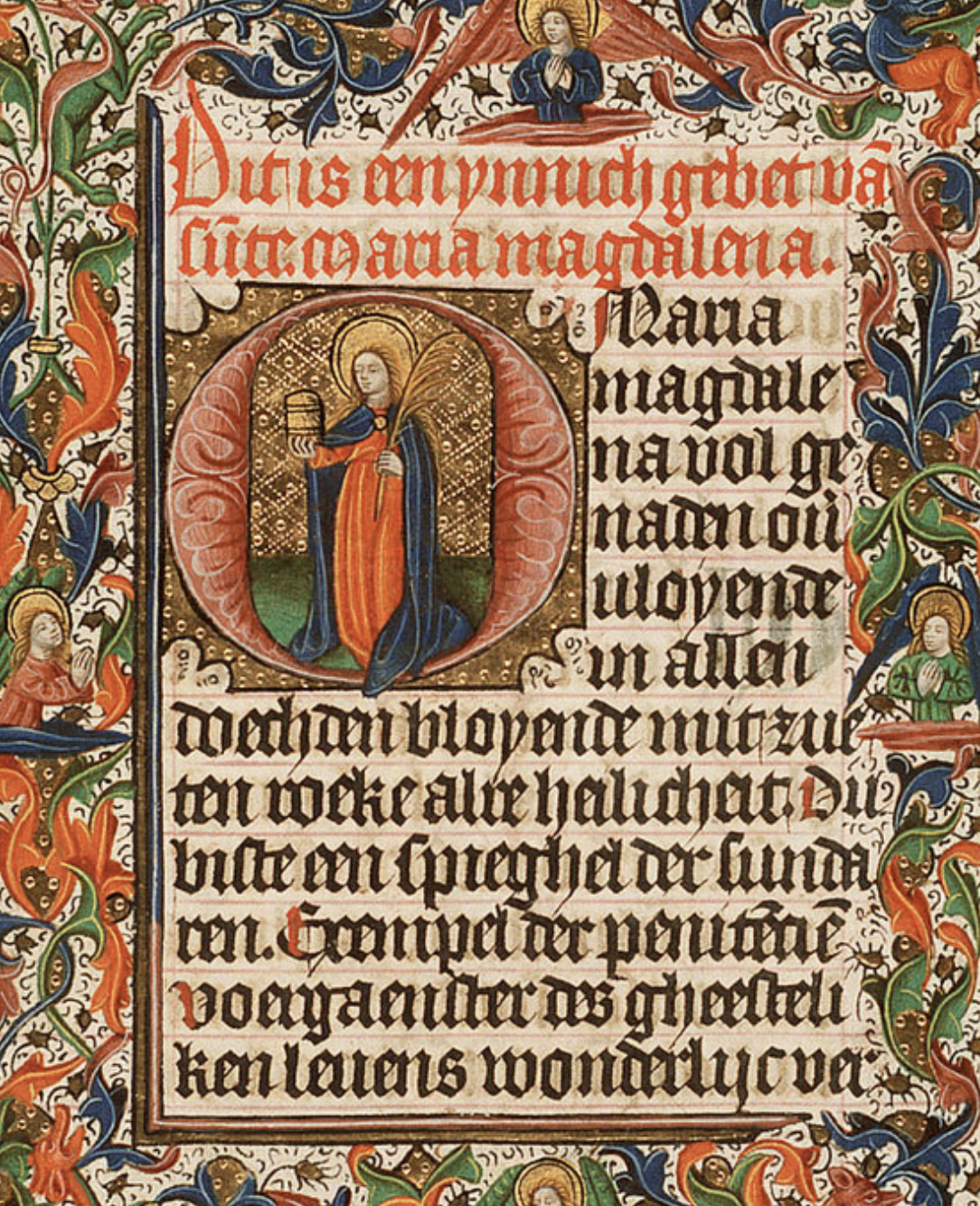
Where Dear M.L. really shines, besides being meaningful and poignant and funny and interesting, so very interesting, is that each and every individual thing this book writes about ties back on itself. Jean is young, yes, and there is a massive power imbalance in her interaction with her teacher, yes, but she is given sexual agency and autonomy. Interspersed in Jean’s story are page after page of summarized excerpts from the lives of Saints taken from The Golden Legend, each woman mutilated more than the last because other people want to sleep with them:
MONICA: You’ve come to think of desire like some sort of hormonal spill that will only lead you astray.
JEAN: But won’t it? Didn’t it lead you astray?
MONICA: [frustrated–eyes cratering with hurt]: I thought you were a good reader, Jean. Lucy and Anastasia and Agatha and Thais and Pelagia, they spell it out for you, in blood behind the text. They are warning you. You can be the most virtuous woman in the world, and you’ll still carry the blame not just for your desire but for everyone’s desire. I paid a price for mine, Jean, but I was tortured for his.
The big reveal, the big twist, is that the thing that really fucked teen Jean over wasn’t the sex but that Professor Harwell shut the door on her being part of the history department to bury his own sin. The second big twist is that she thinks Monica Lewinsky wants her to murder David Harwell for a hot minute, but it is funny. Everything with spirit St. Monica is funny:
MONICA: What did you do?
JEAN: I made a gun with my fingers and pointed the gun at him and made a clicking sound with my mouth.
MONICA: Because you had no feelings for him.
JEAN: Exactly. This is what you do if you have no feelings for someone: you make a finger gun and you go “tchck tchck” with your mouth, like professional people at their jobs.
MONICA: You think you were foolish here, but actually–you’re working hard.
JEAN: I tried. I tried to think my way out of it, out of him.
OH BOY, did I or did I not see a tiktok this actual morning where a girl is telling a funny story about a coworker that she thought was flirting with her but ends up being very transparent, after he asks if she’s single and she confirms and offers him her number, that he is not single? I did! And as she’s reliving this moment that was embarrassing for her (but also seems not embarrassing in hindsight) did she or did she not do the finger gun “tchck” to represent how he wasn’t flirtatiously available to her?! A-maze-ing.
tchck
Adult Jean and Monica Lewinsky break into the narrative like Statler and Waldorf, nudging us toward realizing that the story we are immersed in is in service to character growth in the present. “All-knowing” means knowing how to be funny, too:
Patrick often drinks milk at this hour.
MONICA: Stop it. That can’t be true.
JEAN: This is where I lose you? The milk?
MONICA: Ugh. Go on.
Everything we read in this book—retold past, active present, excerpted Golden Legend—is in service to the grand arc of storytelling, makes readers think about who controls a narrative. What stories mean, and what power they are allowed to have, is a guided group hallucination. All of them, throughout history, throughout literature, throughout humanity:
“Sigrid.” She looks at me. “Why didn’t the nun want us to see that image?”
“It’s not some piece of scholarship to them. It’s not ancient history. They still worship with that image. It’s private. The never expected Ann to publish it.”
“They were mad at her?”
“Furious. That wasn’t for the public to see.[...]For Ann, the lives of these women were an important story–and that story was erotic and challenging. But the nuns still live in that passion. It was violating for them to bee described by outsiders. To be seen as a story.”
I feel a rumble, a wind: I look at Monica, who closes her eyes and breathes deeply. She gathers her strengths for what is about to happen.
Who’s telling this story that Jean is telling to Monica Lewinsky? For teen Jean, the Professor had control: “You’re too dangerous to me, so I will shun you from this department by deploying what levers of power I have access to: your trust in my ability to assess your academic wherewithal; your self-worth as a burgeoning sexual being; your faith in human kindness. Can you argue against the poor marks I record in my gradebook? Will you spiral into self-loathing? Not my problem, I have a career, a wife, and a reputation to protect from your siren’s song of youth and desire.” This is the destruction wrought by institutional power when wielded in service of protecting a petty fiefdom. It—not the sex, but the threat of social shame used to bludgeon the woman into accepting the guilt for both party’s choices—is the great danger of sexual acts between non-coerced adults where one is under the sphere of influence of the other:
What do I want? Just like, devil things? Am I Team Devil? I’d really like to have sex with someone. Virgin is such a gross word, all veils and oils. Extra-virgin olive oil is so arrogant about the purity of its extra-virginal olives who stayed in clusters and sang hymns and his their holes from the hairy humping bees. I don’t care about purity! I just don’t want to detach from the party and go roll around on a pile of boxers in a pestilential dorm room with a man I know only as “the Brad-Master.”
MONICA: And you said you were insecure!
JEAN: No, no, in the context of American college life, I was frankly ambitious.
Jean wants this, and then is betrayed. Again, that’s the whole of the book–we think, are meant to think, that the sex is the “sin” that Monica Lewinsky is here to illuminate. But, as she says to adult Jean, “I am here to protect the difference between giving and being had.” This little pivot brings to my mind the only piece of Catholic lore I have internalized, that the immaculate conception isn’t Mary giving birth to Jesus while remaining a virgin but that Mary herself was born without the original sin Catholicism lays upon each individual human. That’s, like, a big difference. And so it is with Jean as she realizes David Harwell, Professor and mentor, did in fact take advantage of her youth and naivete, but not by having sex with her:
It was a lesson my mother learned young–they will let you have your wish for a holiday, an exercise, a pageant; you can have everything, as allegory; but if you try to hold onto it, try to use the powers of the queen they dressed you up as, you’ll bring down their anger, you’ll count as crazy.
…
We lied. I cannot be his companion. I will have to give David back at the end of the day, or all the villagers will be mad at me. I am telling a story that breaks their story; my game will break their game. There is a dominant truth, an objective truth, and David belongs to it, and must return.
She tells a story, little Jean tells it to David, about how her mom’s village let children choose a different name for one day only, but Jean’s mom refused to return to her original name when the day was done. And David surprises Jean by agreeing with the village, insisting a child should return to its assigned role after the fun is over (see, I told you everything in the book supports everything else). This dalliance is a danger to David Harwell, esteemed professor. And instead of taking responsibility, he exiles Jean from History (the department, not the concept. He’s not a wizard).
When the book was over I muttered to myself, “Self, how does this author know so so much about so so many things?” In the acknowledgements she specifically states that at no time during my research fellowship at [somewhere prestigious] during my phd work in art history was I sexed out by a professor (well, it wasn’t specific stated in quite that way, but it was specific in its declaration). Basically—if I am allowed to extrapolate—the author is a possible version of Jean if Jean didn’t get shut out of her history department. So that explains the “aperture” and “interpenetration” jokes, the deep insight into what caricatures of academics should feel like (though I found no corollary answers for the depth cooking knowledge). Anyway, I’m going to go out on a quote because I would transcribe this whole book if it wasn’t gauche to do so, but before I do I will tell you this: I will soon read American Mermaid, the first book by this author. And I will read subsequent books by this author. And I am excited to do so. And I think you should be, too.
“LISTEN to all of you!” Eye contact is administered like a spoonful of poison to each of us, one by one. “Do you hear yourselves? Have you learned NOTHING through your precious educations?” He is silent for a beat, nostrils flared. “Do you come in one door and spend all these years memorizing dates and writing essays and then leave through the same door no wiser? No more human? Do you apply your brilliant analytical minds to these crumbling buildings and then the minute you encounter real life, history building itself under your feet, you become venal cretins? A jeering crowd? Incapable of seeing human lives with complexity, beyond the uses to which they are put? Think!” He stomps, looking down at the plush pile carpet, fuming. Then, looking up at us again: “For god’s sake, you’re quick to throw the girl under, aren’t you? Week after week of this, church after church, beast-headed man after man-headed beast after Adam and Eve in their shame and morsels of Mary Magdalene’s sinning flesh in a crystal bowl in the crypt…After all of it, you want to sit here and call her a smank?”
“Skank,” mumbles Yoni.
“I don’t even know what that means! Explain how to be perfect. Explain how to always walk the clear path. Put all the goddam priests out of work, you priggish popes and sniggering cardinals!” This is true Neary. Priggish popes is the moment he was born for; he gleams with a sober rage that reminds me why he drinks, because the anger strains his eyes and makes his hands red and his back hunched like he’s some kind of recoiling hole-eyed cave eel, about to lunge.
I could tell Monica Lewinsky tales from my past, remembrances of when shame or embarrassment kept me from pursuing that things I actually wanted (see Mists of Avalon or Clarissa Explains it All, above). But society has never shunted me down the path of bearing the burden of other people’s wants or desires, particularly if those wants or desires were me.