
St. Marks is Dead
by Ada Calhoun
For me, the transition from a freelance to permalance production assistant was abrupt. Later, when I was a production coördinator and managing my own little horde of scrambling twenty-somethings, I learned that when you found a good PA, you booked them even on down days till their other contacts dried up. Their availability for and dependence on you increased in lock-step; morally distasteful but hey, New York is a great place to live but a ruthless place to work. As the good ones accepted easy days in-house rather than pre-dawn calltimes on a windy boardwalk near Coney Island or idling a 15-pass while watching through the windows as union guys scarf plates of eggs inside Tick Tock Diner before driving them to location in somewhere in New Jersey while they nap, the freelance coördinators who didn’t have prep or wrap days to offer had to train up their rosters by picking through the b-squad you left them, their sole tools a cobbled-together list of recommendations and a shooting-day-only budget. C’est la vie.
Being a PA was the best job I ever had: the freedom to get the task done however I wanted; the specialized-but-capricious nature of the work; the entirety of NYC as my workspace. Seabreeze doesn’t have fresh enough fish for whatever reason? Off to the Bronx to walk into LP Seafood, which looked like the image of a working dockyard from any piece of crime fiction, and go ask some guy, after wandering in, if you can get a box of whatever. Next, find a red apple with a leaf-and-branch still attached. Find a smartphone from 2007. Find a way to freeze ice so it’s perfectly clear and not cloudy at all. Find a red subway-tile backsplash. Find bone broth before Brodo, find Allbirds before bankruptcy (and, in a nod to how long this took me to finish editing, also before their AI turn), find a stollen before the winter holiday season.
Because when you’re a new PA and still being booked to deplete your other work opportunities, you’ll run more personal errands than production ones. Gotta find things for people to do to sure they respond to requests for Macy’s commercials or Jay-Z videos with, “Sorry, can’t” for a few more weeks. One of my most vivid memories while being captured for in-house (beyond the rare but impactful fuck-ups, like letting a director’s nephew convince me to be late to a client pick-up, or creating a lookbook of dinner plates that gave Xu Guanyu cluttercore vibes before it was cool) was picking up food for a dynastic visual-artist-turned-commercial-director, whom everyone said was extremely particular and less than nice, but full disclosure was always really normal to me. I worked for him for a while and he never got weird.
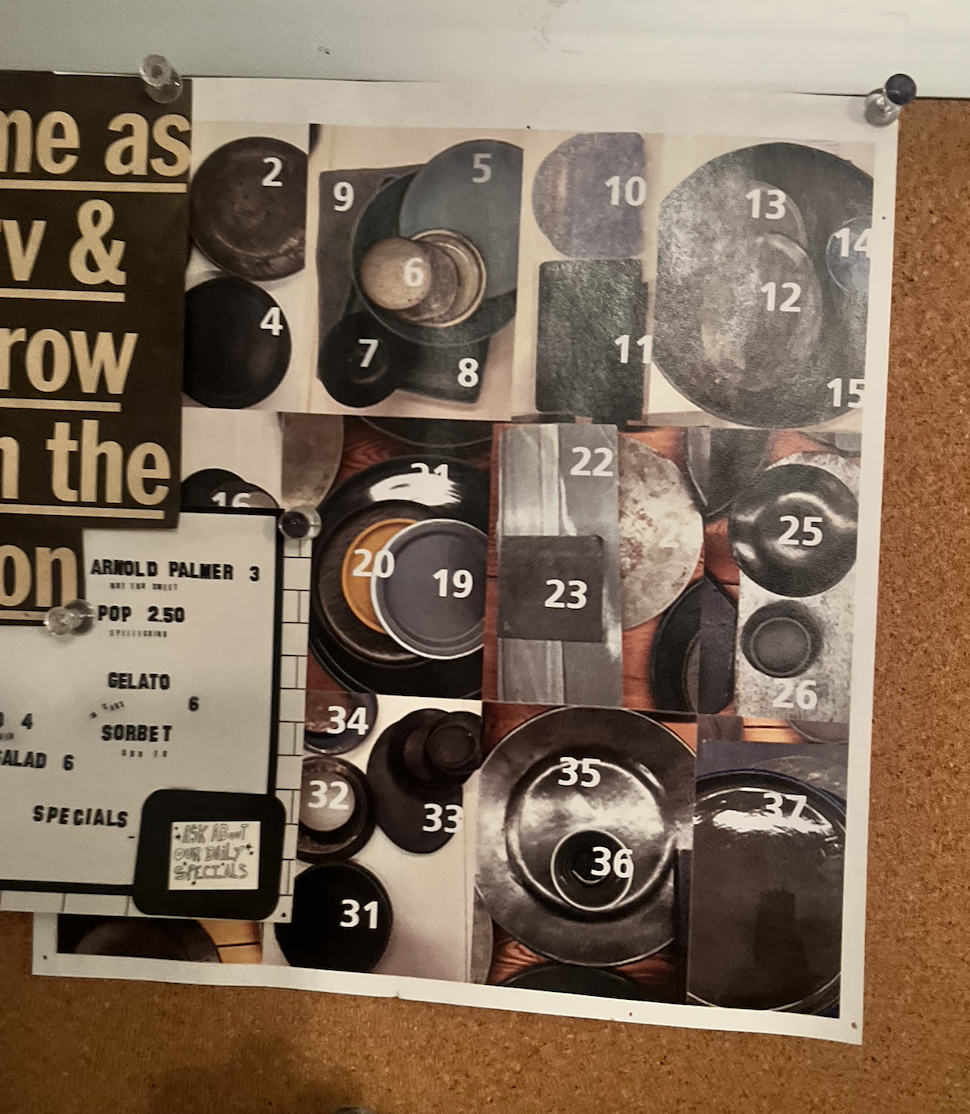
this was called “confusing”

this is art
Anyway, one day a line producer told me to get him chili, and I was like, “Ok, from where?” and he said, “I don’t know, that’s your whole job. We need a range of samples.” So, the studio being in SoHo, I’m running all around lower Manhattan grabbing take-out of all sorts of overpriced chili and bringing them in for taste-tests, and the director picks the one he wants (and the PA’s split the rest or we give them to the parking garage guys or the super, so they don’t go to waste). The producer comes to me later and asks where the winner came from, prepared for it to be the 30$ chili from Balthazar I’m sure, and I’m like, “Oh, it’s from this little place called B&H Dairy right around the corner, how convenient,” and I get absolutely reamed out for presenting this fancy director with a bowl of “diner slop.”
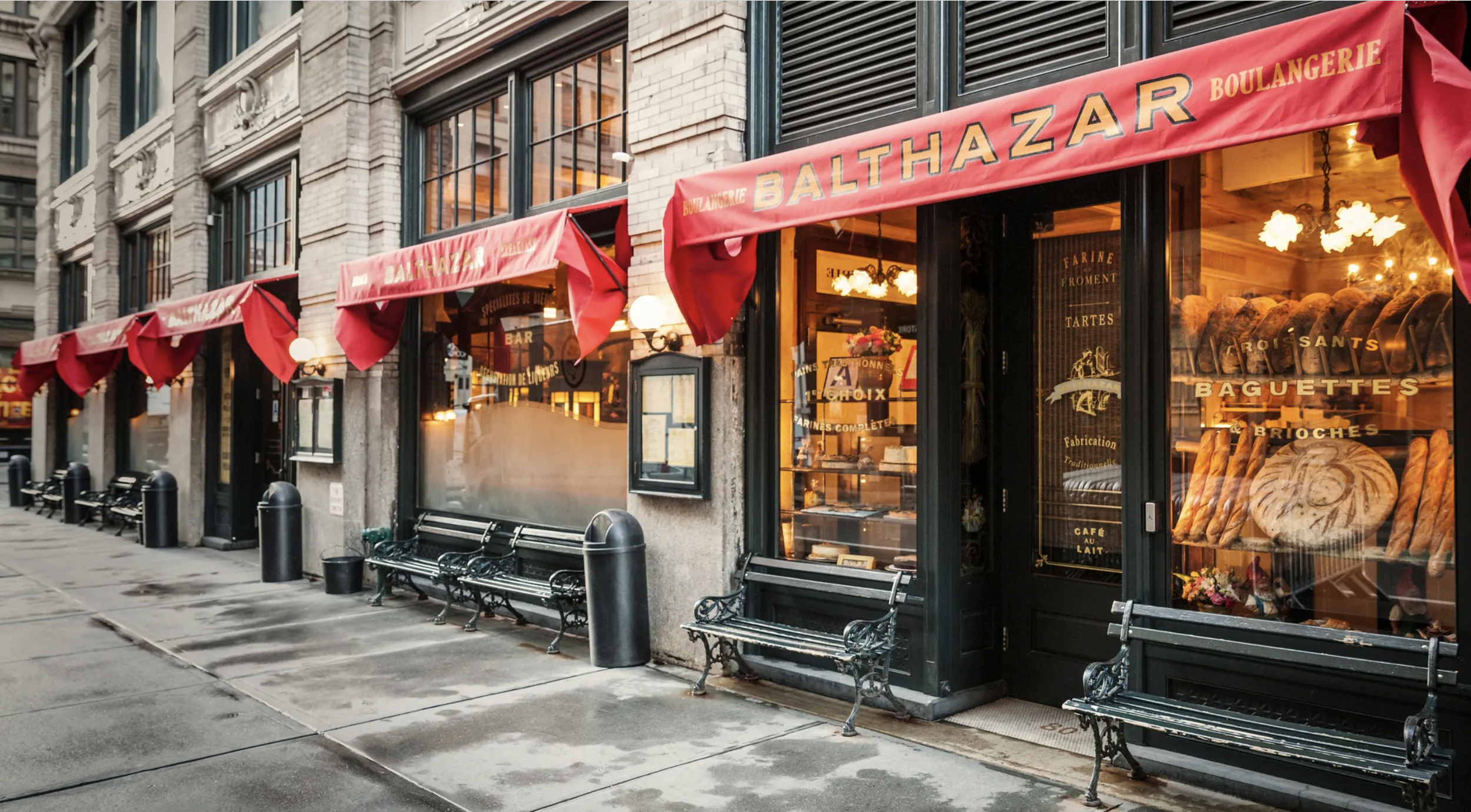
expectation
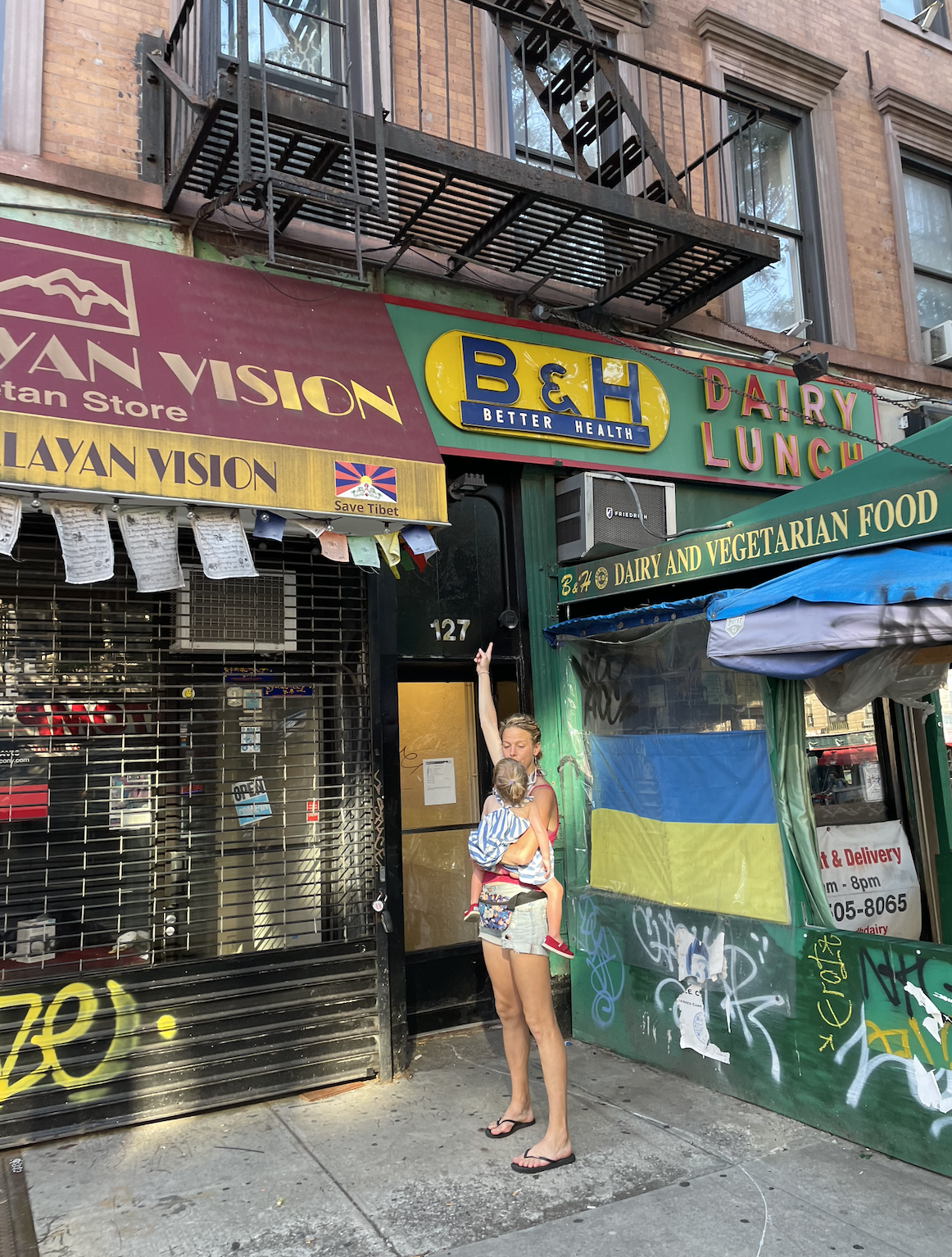
reality (plus my wife and eldest child)
Did you know that when we “served” take-out to our fancy directors we had a personal chef plate it so it looked nice? God, I miss that job. Also, think about it: that director liked the “normal” person chili best. I told you he wasn’t the weirdo his reputation implied.
Anyway, B&H (Dairy, not Photo) is in St. Marks is Dead more than once. “[Joyce Johnson, former girlfriend of Jack Kerouac] often ate at the tiny vegetarian restaurant B&H Dairy (which still serves pierogi, potato pancakes, and borscht on Second Avenue around the corner from St. Marks Place) with her best friend, Hettie Cohen, a petite Jew from Laurelton, Queens, the daughter of a sign-maker and a homemaker.” In a further “the world is small” vibes, B&H’s address on 2nd Ave is where my wife lived when we started dated. B&H was the last place I would pass on my way “home” only a year or two after the infamous chili bowl deception, so I’d think about it a lot. The book uses B&H to transition from Kerouac to Johnson, from Johnson to Cohen, and then from Cohen to her husband LeRoi Jones, who is better known as Amiri Baraka. “St. Marks Place is like superglue for fragmented identities. The street is not for people who have chosen their lives–the married, the employed, the secure, the settled.” Locations on (and around) St. Marks are the superglue that hold the book together, too, as we jump through location-connection-location, each time seeing how a the street influences the people, who in turn influence the street. If you’re on St. Marks, you don’t know who you are yet. And once you do, it’s probably time to go.
When I worked around the corner, I spent a lot of time on St. Marks. Not really doing anything cool, though. I was purely a daytime tourist: through the bulk of my time working in the area, I lived in the unarguably least cool part of NYC, the Upper East Side. I merely lingered on the fringes of cool places during cool-people hours, eventually coming and going from the apartment on 2nd, which, no matter that the book calls it “around the corner from St. Marks,” is functionally St. Marks. Perhaps this scumbag-grifter-NYC-dating-scene-vibe of always being in your GF’s apartment because it is way closer to work was St. Marks culture.
Enough about me, lets talk about you for a minute. And by you, I mean, finally, let’s get to the book. Because St. Marks is Dead: The Many Lives of America’s Hippest Street was really fun, if a bit chaotic. Fun because the details are there, interesting, surprising, exciting. Chaotic because the way each microvignette is presented flows in the moment but, after they’ve happened and you’re trying to piece together a grand cohesion, things a bit jumbled together. Chapter 9, for example, starts with the Elevated train coming down in 1955, heralding the infection of Greenwich-Village-boho vibes into the previously entrenched East Village anarcho-slum-hipster cool. Then, the chapter is stuffed with stories from the ‘40s, so you’re left wandering and wondering where in temporal space these tales are anchored. The book is a friend piecing together a really long night out, filling in holes in the story as more bits come leap to mind. “Oh, yeah, so after we left the Johnson’s we got some slices but did you know who we saw? Mari! That was on Delancey, did I mention we started out at Vic’s apartment? He has so many plants, thry aren’t his, it’s a sublet, it’s been a party house for so many years that people nobody knows still just show up sometimes, just ‘cause they know it’s cool, and there’s always sort of a vibe there, but we went there first after the bridge walk, l love the liminal space of the billyburg bridge, it’s like, in-between, you know, not this, not that, just pure existence. So, no, Mari didn’t get pizza because she went some uptown at like, 10 or something.”
Certainly the story the book is telling is thrilling, but if you’re trying to actually follow the linear map of how St. Marks morphed through trends and across generations, it’s hard to jump around that much. I am reminded of the proviso at the beginning of Dance of Dragons, I think, where GRRM felt like he needed to explicitly state that later chapters didn’t always mean later in time: if the POV switched to a new character, that plotline might be running contemporaneously with something you’ve already read, just elsewhere. Ah, books can be magic, can’t they?
Also, my hypothetical chatterbox definitely started using “Billyburg” ironically and then it sort of morphed into feeling right, you know?
A college student told me that St. Marks Place died just a couple of years ago with the closing of the Cooper Union Starbucks–a business that was initially hailed as the final nail in the street’s coffin.
Was it perhaps Taylor Swift, Girl Detective who said that?
As students, James and his friends lounged there all day free of hassle. “I came back from break, and it was all gone. We used to hang out there and get cups and fill them with strawberry champagne and feel glamorous. There’s no room for life to be lived there now.” The gentrified are the gentrifiers who stuck around.
I’ve been out of NYC for nearly as long as I lived there, and likely because I left before I wanted to, I’ve never lost my romanticism for the place. I love NYC more than anywhere else, and I think I always will. Every memory, from wretched to enchanted, is core to me. I bring my kids there most summers and we just walk around visiting playgrounds and eating popsicles. We don’t really visit St. Marks, though. It’ll be there for them when they need it, even though it won’t be my St. Marks anymore, if it ever was. St. Marks is Dead was written like a little frozen historical document of what I remember, along with some tangled and appealing history of how it got there.
We all have our own St. Marks, and while I never felt ownership or kinship or belonging on the real street, I did find it in St. Marks is Dead.