
My Favorite Games of 2025
As always, an annual top games list is heavily dependent on the material conditions of the writer. Both of my favorite games this year were ten hour experiences, and their relative brevity contributed immensely to my enjoyment. One was over because I decided it was over, and the other I wrung out nearly every drop of content I could find, but both felt complete when I stopped playing them.
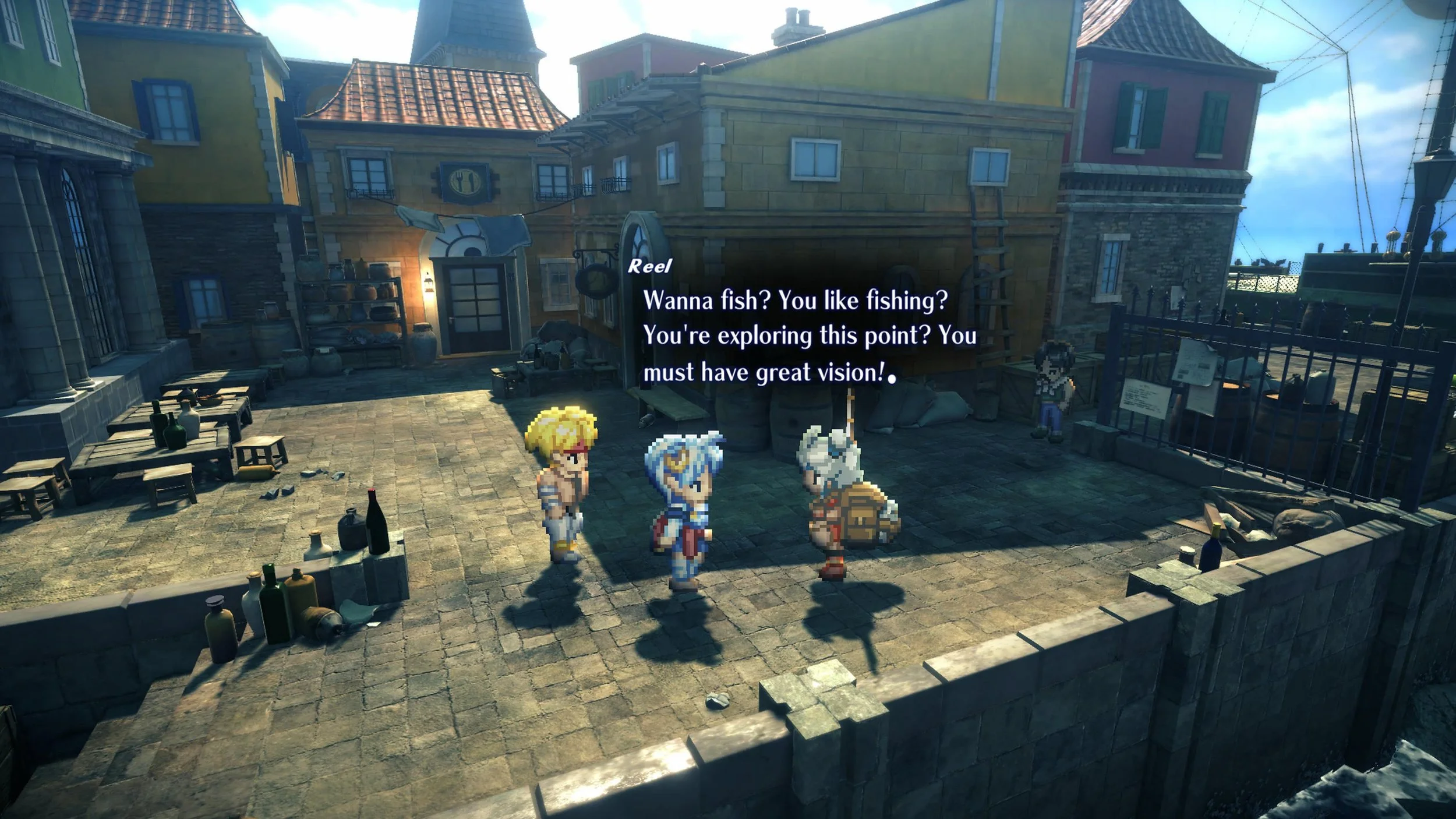
On the other end, I was pretty quick to drop games once a sense of mystery or confusion cleared up. My time is limited (and increasingly, feels finite) but the amount of things I want to play continues to pile up. Star Ocean Second Story R, for instance, seems fine. But I have no nostalgia for it—I started Star Ocean with Till the End of Time, and in fact, I have Divine Force sitting in my cabinet right now, waiting to be played—so as soon as Second Story felt even a little bit tiresome, it got packed away.
Sometimes the cresting wave of desire faded before time allowed it to be sated. For example, I took my kids to DisneyLand this year and came home itching to play Star Wars: Outlaws. Once there was actual space to play it, that initial blush of cross-media saturation had faded and I found myself with the type of game I don’t really like that much. Outlaws will still exist after our next trip to DisneyLand, so I have a feeling I might be back.
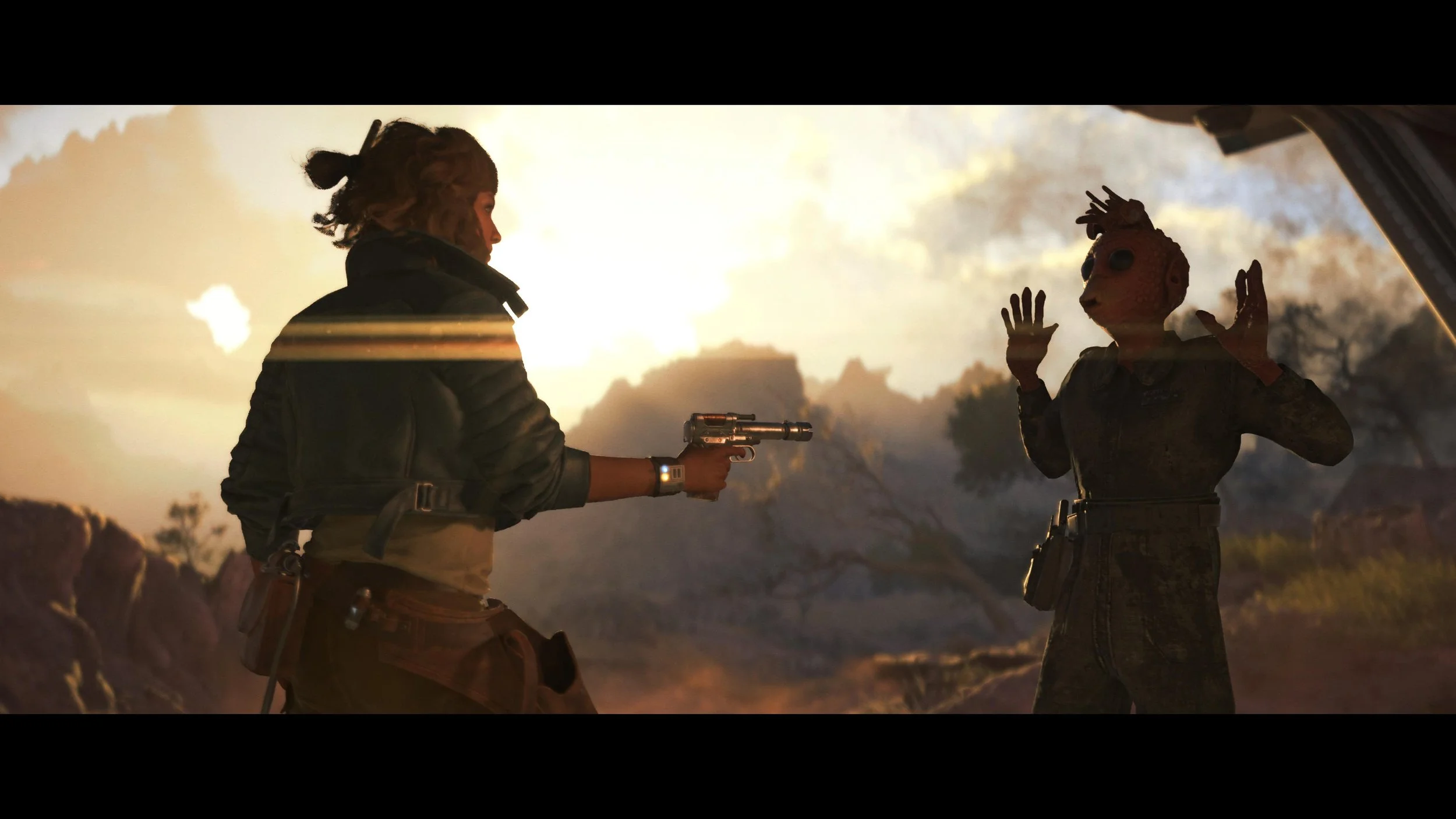
i mean, it’s good star warsing
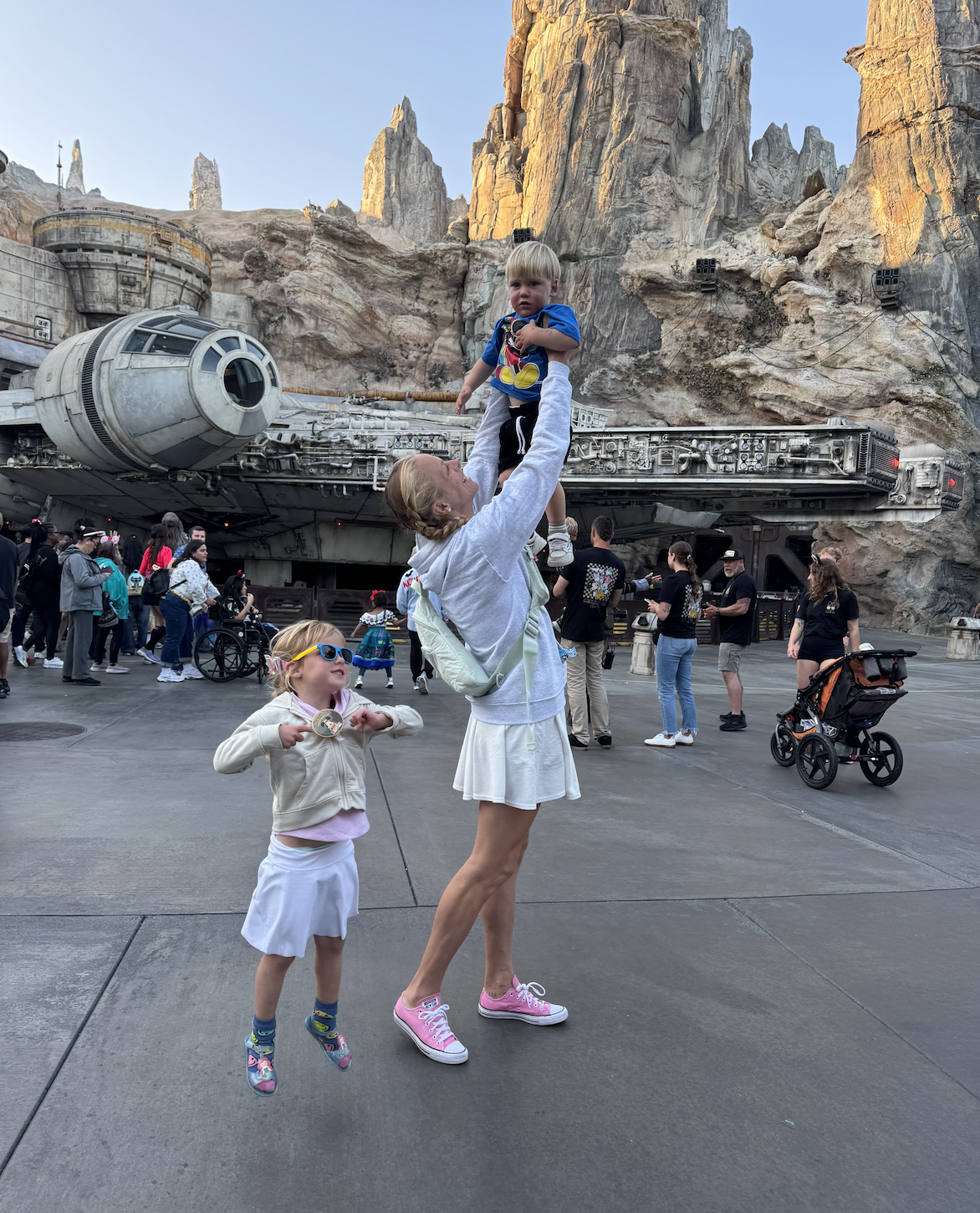
same picture
If I had a Steamdeck I would still be playing Wildermyth, but I don’t, so once I understood it was a bit of a forever game I needed to walk away. It’s the same motivation that has kept me from AOW4, the same root cause that makes CIV7 the first CIV I haven’t played since II. And in a note of personal growth, I finally overcame my resistance to the aesthetic presentation of Monster Train 2 and loved it for about a week. But after a few victory runs I never wanted to pick it back up again. If I had written this list during that week, though? Definitely number one. I might still be playing it if I had a friend or even on online community that I could talk strats and revel in both good and bad runs with.
The biggest vibes swing of the year for me was Fantasy Life i. I played the 3DS Fantasy Life at a really strange time in my life—I was still living on a couch, though I had stabilized financially enough after a big break-up to buy a 3DS—so it came at a historic low for me in both videogame time and general life time. By late 2014 I had already been carrying my 3DS all around Manhattan, maxing out my streetpass hits every day (thanks, students of NYU). Playing Fantasy Life whenever I had a few minutes felt soothing at a time of turbulence. I quite liked the crafting and the intricacies of collecting materials and balancing the different job levels. Building good stuff was a concrete achievable goal at a time when actual real life goals or even plans felt tenuous at best. But the structure of Fantasy Life is eventually too visible: once you’ve increased your class ranks, the next tiers truly are the same tasks with recolored wood. Same monsters, same collection points, same objects, different palettes. It doesn’t work for me after the first twenty-ish hours, though it works really well for those hours. Nothing has changed about the structure of the series in the ten years since that first version, so I just can’t see a point to continuing the recent game any further.
That’s the story of 2025 for me—if the game was long, I stopped playing it once it felt predictable in the slightest. I was down bad for novelty; once it left, so did I.
5. tainted grail: the fall of avalon
I keep myself away from Steam and GOG and emulators in the same way someone who is quitting “social smoking” needs to stop going out to bars for a few months. PlayStation and Switch serve as my methadone—I would relapse hard without them, but they lack the punch of unlimited PC gaming. The need to wade through the amazingly slow load times of Switch or plant myself in front of the TV for the PS5 mean that playing games is a conscious choice that I can’t accidentally stumble into. All of this is to say that I really wanted to play Avowed this year, and couldn’t. However, Tainted Grail was there for me. Grail might even be more my speed; It smacks of Fallout: New Vegas, which is high praise indeed for First Person RPGs. Let me explain why.
New Vegas was one of the first games I played where I felt okay not being the perfect celestial avatar of solicitude: I didn’t solve everyone in-game person’s problems, I didn’t systematically explore every nook and cranny to make sure I wrung out every drop of content, I didn’t feel bad just wandering around. The world felt a bit mean-spirited and a bit ugly, so I felt okay leaving people in the lurch, missing things, exploring only what I wanted to. If you also play a lot of games, you should understand that the strange compulsion to cover every inch of the map can feel onerous and make what should be a fun experience begin to feel like homework.
Grail has a world that is gross in a way I don’t normally like: lots of gore and spooky people, torture implications and wasting diseases, lakes of blood and black sabbath rituals. Underneath that ‘70s spray-art van heavy metal aesthetic is the King Arthur mythos—chivalric Romance intact—so the juxtaposition makes the grossness feel intentional and helps sand down the edges (at least in my mind) when the dialogue veers into, “My mother, she was bad at cooking and thus I’m glad she’s dead” territory. I don’t trust the politics of this game, such as they are, but the in-game world is unfortunate enough that I can give it pass for being intentionally unpleasant to reflect a post-Camelot (Kamelot, here) fallen empire.
The game itself plays on the spectrum of the Morrowind-Oblivion-Skyrim style. Perhaps once the gameplay reduces down to wireframe and the vagaries and obscurity of what exactly my character can do is uncovered, I won’t like it as much. But for now, running around and desperately trying to find a good single-handed weapon is incredibly fun. The large amount of skill trees coupled with the limited bestowal of skill points is great; everything feels important, and having found five two-handed weapons that look super strong but putting my character points into endurance to wear heavy armor so these weapons aren’t that useful to me itches the part of my brain that says choices should matter. I’m fifteen hours in and using a non-magical branding iron that I found on an enemy. Every single battle is still a chance for me to find an upgraded weapon.
While I’m mostly ignoring the sidequests in favor of exploring (I turned on subtitles for the first time since 2005’s KOTOR2 because the voice acting here is—charitably—uneven), my rare resistance to systematically interacting with every NPC led me to one of the best quest experiences in recent memory. In almost any other RPG, when I get to a new town I find every person and collect all their quests. In Grail, exploring and fighting things is way, way more fun than talking to others (reminder: bad voice acting; tediously wordy NPCs; unappealing moral positions). I just sort of ran around the first town, looting a bit and ignoring most of the people, not at all my standard meticulous hoovering up of content like a Roomba. As I spent more time crossing through the town to get to the blacksmith’s station, its eventual familiarity bade me explore it more completely. I finally decided to chat with someone that I had previously ignored and he starting talking about how he loves armor, how he argued with the blacksmith about what the soldiers in town should wear, how he had this book that taught him about armorsmithing. I made dialogue choices that might have been the inevitable result of funneled game design or buried and special (and possibly missable, which would make them feel amazing; even the possibility that I found this quest on my own and wasn’t corralled into it is impressive), he game me that recipe book with the armor he was talking about in it. And it looked pretty cool.
A note about crafting: I quite like how it works in this game. First, you need a recipe and the ingredients, and then your crafting skill-level gives you only a percentage chance of making what you wanted. There’s a whole skill tree about crafting, but I sure am not spending my precious points on it when I can keep boosting my armor score through the roof. Earlier in the game I blew most of my money on an expensive recipe book that I had purchased from the blacksmith; in an effort not to waste that gold, I had intended to savescum my way into crafting some hard-to-make fancy Knights Pants. They were much stronger than what I had found on any enemies, but I had something like a 4% chance of making something “better than broken object”. Luck must have known my intentions, however, because I crafted them on the first try. (Note from the editing round: I found a pair of Knight pants on an enemy the day after writing this: farewell to the meteorite ore I used to upgrade my crafted ones from “weak” to standard).
The armor the NPC taught me to craft said it had a defense score of 80. My current armor had a score of seven. I figured it was a typo, or that the armor would take up all five spots, or be really heavy for this starting area, or something like that—the jankiness of Grail ignited some hope that I was about to get something really good, either because the balance testing wasn’t there or there was an actual programmatic error.
So I gathered up the two wolf pelts and already had whatever else I needed and I crafted this really cool looking icon and…it returned a piece of crap with a defense score of one and an item description that said something like “It wasn’t real. What did you expect?”
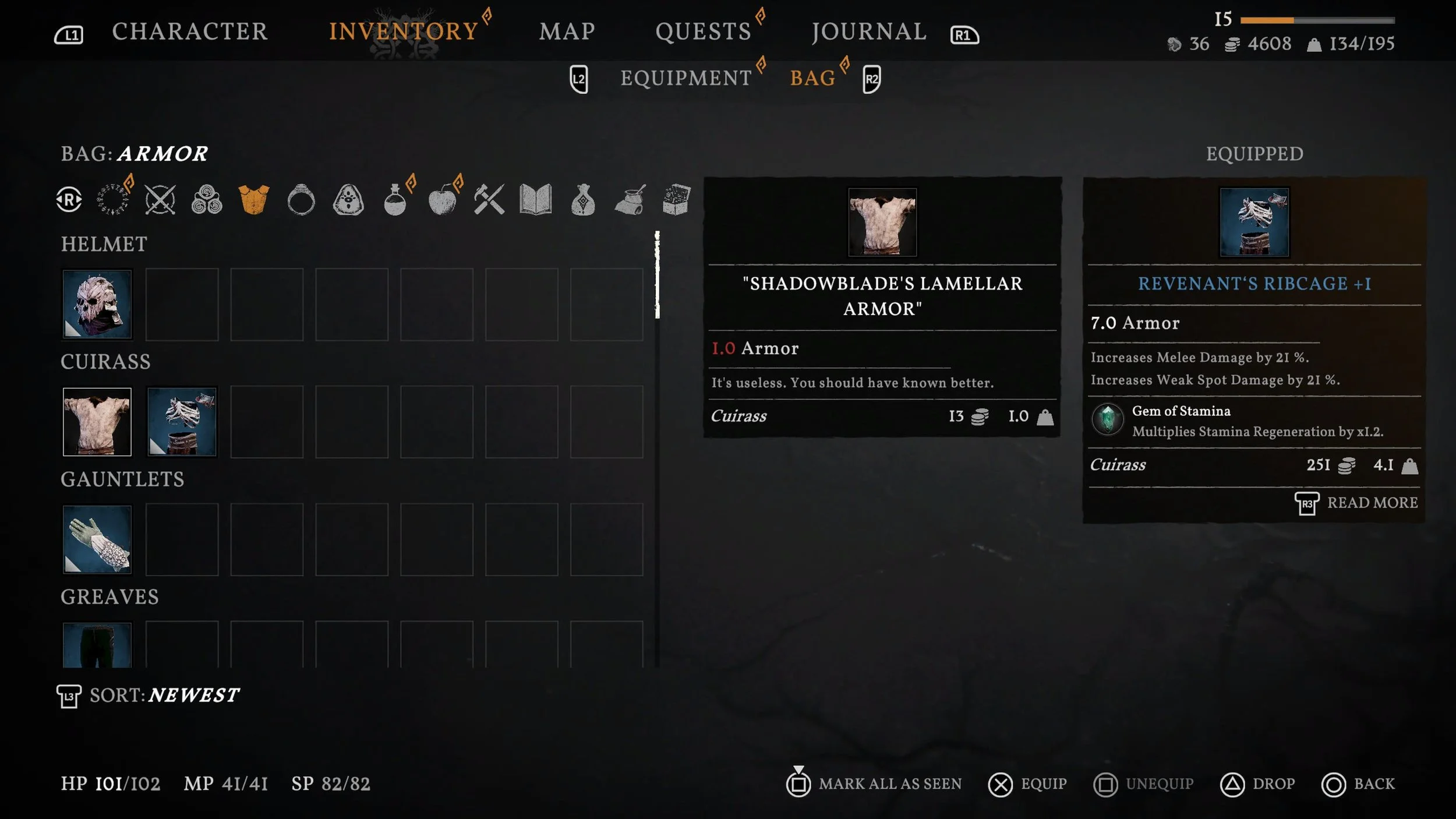
it got me
It genuinely got me. It made me smile, and then I went to sell it to the blacksmith just to be rid of it and he said something like, “Oh, you made armor patterned after that guy’s book? That armor is shit.” and launched a quest to go find the author of the book and yell at him or something.
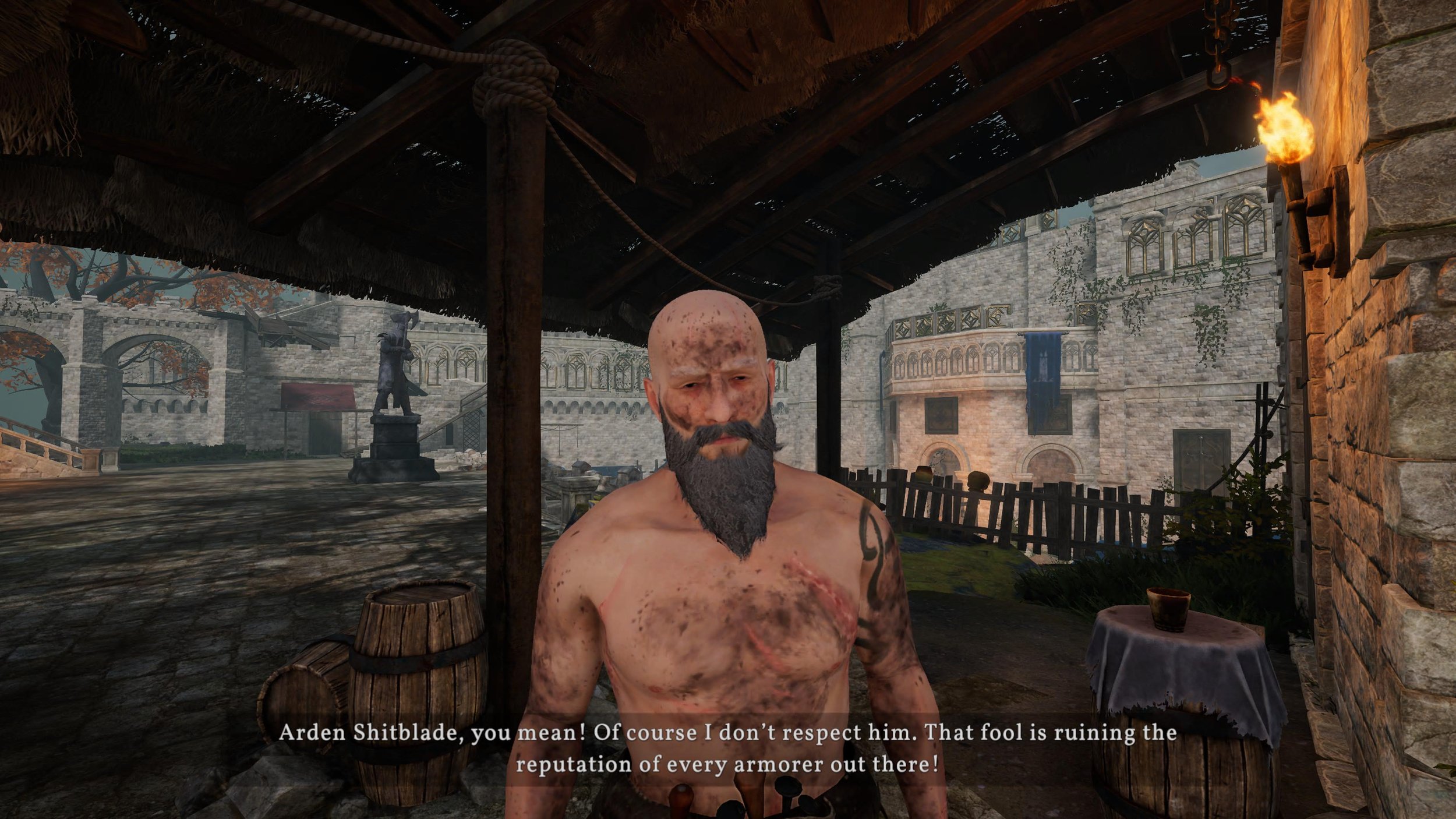
That’s pretty good. If the game was fully polished I don’t think I would have fallen for the absurdity of an armor score ten times higher than what I currently had, but I hadn’t played Grail enough to know what the range of armor might be, didn’t know if maybe some errors or unbalanced elements had snuck into the code. And I certainly didn’t expect, after making it, to have another character comment on my action—I have turned off the quest markers (as best I can) and rarely read the quest log because, again, I’ll reiterate that unlike most RPGs I don’t feel even slightly compelled to do everything, as the world is kind of gross and the people usually aren’t that nice.
I really love what I have played of this game, enough that it has kindled within me some thoughts on how I would tweak it to make it even more what I want (I am also still playing it, in 2026, as I write this). Leveling up is mostly what I want for this type of game, but I would change it to have just the tiniest bit more finesse. In the game now, you get general experience points for quests and for killing monsters which, when you get enough, raise your level and give you a stat point and a skill point. There are also specific levels for individual categories—Heavy Armor, Blocking, Jumping, Two-Handed weapons, Potion brewing—that increase when you use them. I mentioned my crafting skill level earlier, but it extends to combat, as well, so if I’m using bows a lot, my archery skill will go up. Archery for me is about 20 right now, which is half of my one-handed weapon skill, which tracks with how I play my character. I love individual skill levels that go up when you use the skill. These also give you a little bit of general experience when they rise, which is very fun.
However, if I gain a general level from killing monsters using only heavy hammers, dodge, and light armor, I can still allocate my skill point into the sneaking skill tree or my stat point into the magic stat. Now, I know no one but me would like it if you couldn’t pick from every skillset and stat spread on level-up. And I know I can solve this problem myself by simply restricting how I allocate stats and skills if that’s how I want to play the game. And if you actually implemented my idea you’d run into the problem where a player could always choose dexterity because you gain athletics and acrobatics every level just from moving around (à la original Oblivion). But I would still like it more if I was somehow forced to use spells if I wanted my magic stat to have a chance to go up.
I didn’t finish Grail before 2026 started, nor am I done playing it yet. I have so many games I want to try and such limited time right now, but I continue to be engaged with this game, even after Avowed has finally been announced for release on PS5. Other first person exploration games will have a wait—Tainted Grail has me, and I’m going to ride it out for as long as I can. If you liked Oblivion’s mechanical clarity but fondly remember Morrowind’s weird opaque possibility space, you’ll find both in Tainted Grail.
4. clair obscur: expedition 33
I had my eye on Expedition 33 for a bit, but it had that Greedfall or The Order 1886 vibe too much for my taste, so I decided to skip this one (clever readers can intuit that perhaps this was not the end of the story). By early August the hype had increased to a fever pitch, it went on sale, and I was far enough away from 90 hours of Metaphor Refantazio to be ready for more turned-based stuff. The opening scenes were pretty good, so I kept going—it didn’t hurt that I was laboring under the misapprehension that this was a short game—like 25-35 hours—for some reason. Around the 35ish hour mark, which was the end of ACT II, I fully believed the game was about to wrap out (it wasn’t; there is a third act). Anyway, once I got through the first zone and hit a not-to-scale world map, I was in agreement that this truly is what everyone says it is—a really good RPG made by people who played a lot of RPGs.
It’s the little details that could have only come from people who know a lot about classic RPGs that makes this game what it is. The overworld swim speed is fast, and can be made to feel faster because the sprint button still does something. Cosmetic choices for characters, even silly ones, stay on, even in dramatic scenes (though not in most of the big cutscenes near the finale, unfortunately). All the weapons have unique appearances in battle. The temporary character’s skilltree isn’t so artificially small that you’ll know he’s leaving, no matter what people on reddit pretend.
The biggest innovation to me was not the QTE-damage or -effect boosts, which are very Lost Odyssey or Mario RPG, but that they found a system that can obviate the need for in-battle healing. I cannot stress how amazing it was not spend one of my limited turns healing people up, or speccing out a character like Lune to be the boring pocket healer. I had the game on hard for the same reasons I almost always have RPGs on hard; if the battles aren’t a challenge, then the discovery of stronger loot (my favorite part of RPGs) or speccing into stronger battle skills (rather than sometimes optimizing social ones, if the game has that option) is diminished. I didn’t realize that the first chromatic knight I ran across wasn’t a storygate boss that would kill any of my characters in one hit. I assumed he was placed in my way to teach me everything I needed know about counter and dodge before I could move on. When I finally beat him, I got a fun item because he was just an optional enemy that held some cool loot. Even before I learned about the Sekiro influences, this first “don’t get hit” battle was a very Madame Butterfly moment for me.
The interplay between, “Is this hard because I chose hard, or hard because I am supposed to always dodge?” is the thing that kept me from fulling grasping the contours of the battle system for a long time—nothing stays fresh forever, but Expedition 33 kept me on my toes for more than half the game. I needed to engage in the pictos system, because things were hard. I needed to learn individual boss patterns, because things were hard. I sought out challenging optional fights throughout the game, because I knew the items and experience points would help me during more hard battles to come. The most fun I had in the entire game was the Chromatic Gold Chevalier—I knew it was optional, I was functionally ready to be done with the game, but I really, really wanted to beat it. I wanted whatever loot it was hiding; I looked forward to seeing if new weapon abilities or a new picto would better fit my chosen character builds. As a side note, I never really found a ideal weapon for Lune, so she switched around quite a bit for the whole game. Oh, and the item from the gold knight was a really good sword for Verso, who I didn’t like and didn’t use. But it was a really, really good weapon.
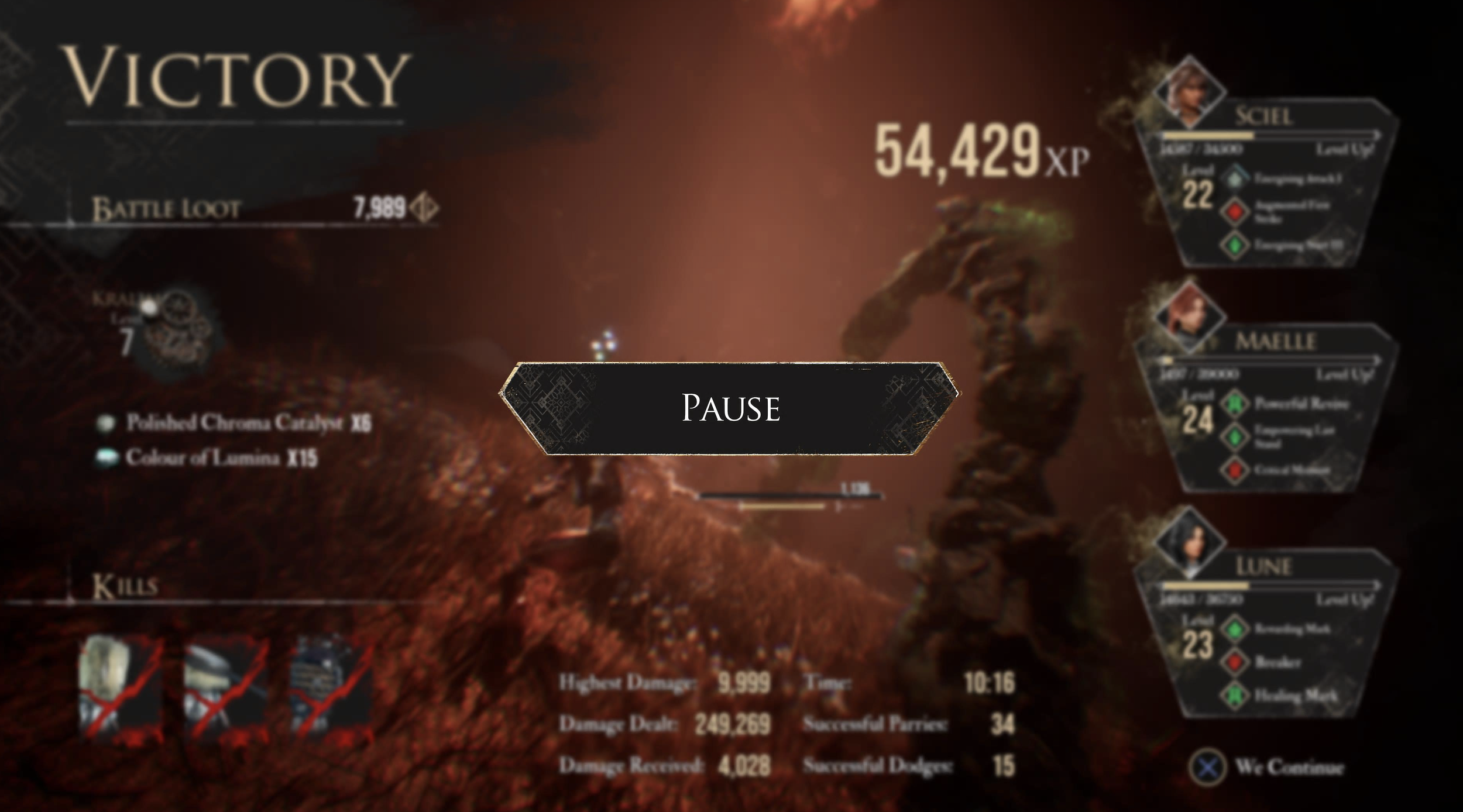
I don’t remember why this was important to me
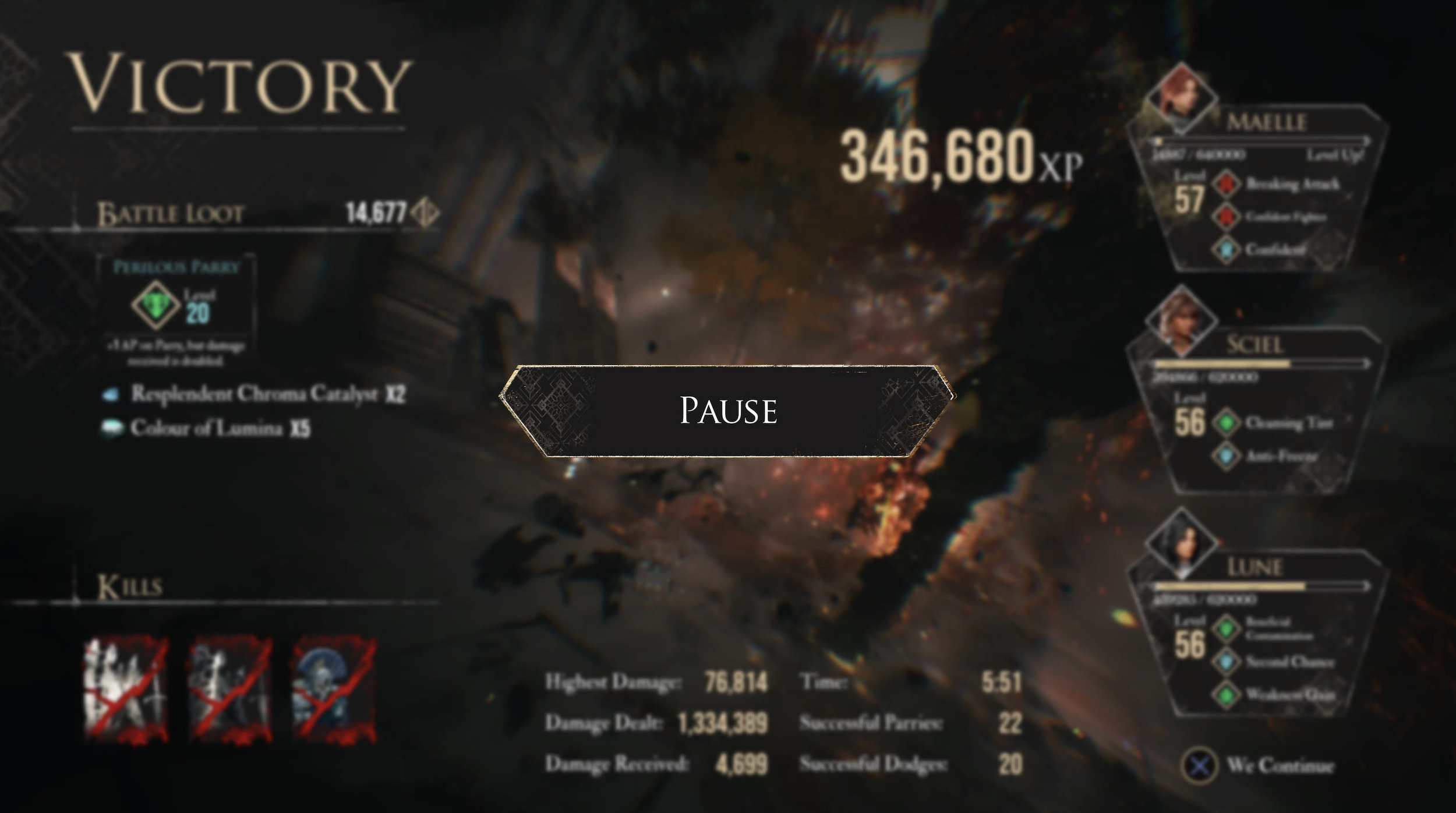
being level 55 and beating the chromatic gold chevalier on hard was impressive enough to screenshot, apparently
The characters I did use were vastly different from each other in loadouts—Maelle was pure glass cannon, and she hit for critical damage nearly every time. Before the damage cap was removable, she would crit into 9999 so often that I simply stopped increasing her strength at level-up. She used the same weapon the literal entire game, the sword that made stuff catch fire on crit. Making sure things burned was crucial to her other skills, particularly because Lune didn’t use anything down the fire skilltree.
Lune herself was damage-focused, sure, but mostly I had her for her incidentals: the slow from Tsunami; breaking poise or whatever that guard stat was called with Rockslide. Lune’s damage was fun and very swingy, because she had on the gambling ability that sometimes did 2x damage and sometimes half damage. Lune also had on a bunch of “if I die you all get bonuses” skills, and a self-resurrection one, so bigger battles often went more smoothly if she went down early. Both Maelle and Lune were super speedy, sometimes even lapping Sciel.
Sciel was strange to me, with complex skills and a weird weapon that always added 10 of whatever her debuff stat was to an enemy at the cost of making her take double damage. Because of that, she was my only character that ended up statting into health and defense—by the end of the game, she could take multiple hits and use her abilities to lifedrain back to near-full. She was functionally playing a different game than Maelle and Lune, who would instantly go down if I missed a dodge or parry. This intense tankiness definitely helped me out a lot. Sciel was also wearing the Sakapatate blob costume for most of the game, so she looked intensely cool.
The characters are mostly great. However, I had a one big issue with the structure of the game. ACT I is title-carded “Gustave” and you play as Gustave. When you go to camp, you are Gustave. Yes, you can switch to Lune and float around during normal gameplay, but by forcing you to interact with other characters as Gustave at camp, his perspective is forced onto you. He is the narrative anchor. Whatever, pretty standard brunette lead character. Likable enough.
ACT II is title-carded as “Verso,” and you are now Verso when you get to camp. He’s functionally Gustave with Polgara the Sorceress hair and I would have had him be voiced by Adam Driver but other than that he is also quite boring and tedious compared to the girls. Fine, whatever, his skills are strong but I’m not using him because, again, boring dude but crucial to the plot so I guess it makes sense that the chapter were he is the focal point has him being the campground POV.
But now, we get to the great betrayal of Clair Obscur: Expedition 33. ACT III is titled “Maelle,” your darling girl for the entire game. She’s the star, she’s the centerpoint, she’s certainly the POV for this final chapter, and so when you go to camp, you are conditioned and expected to play as Maelle. And yet. And yet…you’re still Verso. A travesty of storytelling. A disaster, if you’ll allow me to hyperbolize. Please follow the pattern you established, game. I cannot express how annoyed I was to see forced-Verso again after that title card.
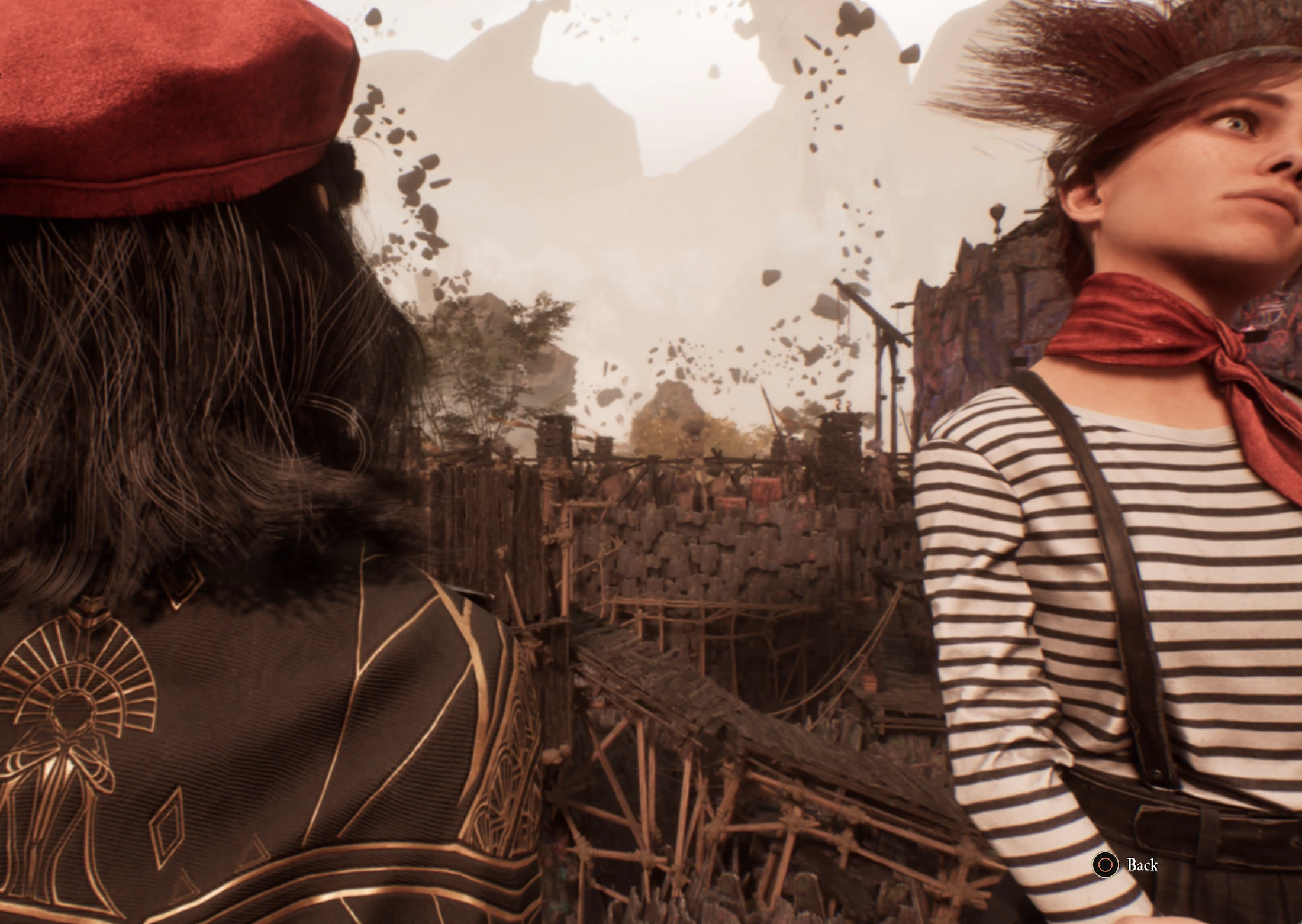
Gestal hair for Maelle, forever.
While a lot of comparisons have been drawn between 33 and Final Fantasy 10, it, to me, felt more like 6. Particularly, ACT III as World of Ruin. In FF6 you wake up at Celes (see, you could have been Maelle) and you can go find your scattered companions but Kefka’s Tower—the final dungeon—is simply sitting there looming, an available destination for whenever you feel like wrapping out the game, You don’t have to do all the extra content to get to it. I was so grateful to 33 that I could do my Lune sidequest, run a few bonus dungeon areas just to see what was up, fight a really hard optional boss—which I knew I could beat without having to grind in a different area if I spent enough time learning the patterns—and then peace out of the game.
Final Fantasy VI came out when I was eleven. I had the time and inclination to I battle dinosaurs on a tiny island until I broke the curse on the paladin shield, to find every magicite, collect every overpowered relic, and even replay FF6 enough times that I could find my way through the plot with my eyes closed. I am old now. I see that 33 has those options, and I appreciate them, for other people. I didn’t do all the side content. I didn’t max out my characters. I didn’t replay the game. I didn’t even replay the end to see what the other ending would do (credit to the game for two things about the ending: one, making me care enough about the story that I picked Verso at the end, even though it was clear the two of them would duel and my Maelle was nearly a level sixty insane powerhouse and Verso was a picto-unoptimized (though with a strong weapon) level mid-thirty; two, choosing Maelle was clearly safer for me from a gameplay perspective—I had no idea if this final battle would be something like the Suikoden Pahn duel, where if Verso wasn’t well-leveled I’d just get bodied—but even scared of hitting a gameplay wall, I picked Verso, and the mechanics of this final battle were clearly dummied out in favor of functionally letting me win, which was greatly appreciated because at that point I was ready for the game to be over.
I completely understand why Expedition 33 hits so hard for some people—it is fun to play, has interesting characters living a world with enough reworked elements of classic RPGs that it will tickle nostalgia-reactions without completely relying on them. It was my second favorite RPG of 2025 because I eventually found myself, near the start of ACT III, playing characters that were strong enough to handle whatever the game threw at them through a combination of my reflexes and their loadouts. It was fun getting to that point, but once I was there and I knew anything was beatable with enough memorization, the joy of finding new pictos or weapons to help me stay alive in a dangerous world was a little less vibrant.
3. Metaphor refantazio
I will quickly recount my personal history with the Persona series because I think it matters here: Starting at 3, I kept buying them at launch. I bounced hard off the original Persona 3, beat Persona 4 but got the ending where the protagonist just leaves the town on a train while looking out the window into the fog, and then golden-pathed Persona 5 without ever looking anything up. I do think the games keep getting easier, but also the structure clearly has become more intuitive to me. So, as I mentioned last year when I ranked the Metaphor demo as my fourth-favorite game of 2024, I knew I would play this game on hard.
Hard mode did make things hard, but in a way that felt good. It forced me have to make some early choices for powering up my characters over the “optimal” collecting of storybeats; I sometimes felt like I needed to go back into dungeons to do some sidequests to get items and experience even if it meant I had to wait to do some social links. Eventually I knew I’d outstrip the power curve, but I wasn’t able to clear dungeons in a one-day rush—a hallmark strategy of experienced Persona players—until the third major dungeon. That’s a pretty long time! I also knew so little about this game going in that I didn’t expect to get more people in my group—I used odd class combinations to make my starting squad very different from each other, and even as more people showed up the variety of classes available meant that everyone stayed pretty unique throughout the game.
In comparison to the Persona series, Metaphor’s job system was so much more fun than demon-collecting; recruiting monsters has always been my least favorite RPG mechanic. Metaphor gives you the chance to battle in a.real-time action system for job-point grinding, too, which felt really great. I did get tripped up a little near the end, though, because I hadn’t really followed the character patterns: Strohl was my cleric and monk, Hulkenberg was my warrior and sniper, and my main dude was sometimes a knight, sometimes a wizard, but mostly a magic knight. Being sort of funneled into an “optimum” class for each character at the end frustrated me for a moment—I didn’t expect it, and I had none of the unlocks required for Strohl’s Royal Warrior, for instance, and was even further away from Hulkenberg’s Royal Knight (she never used magic in my game). I didn’t like feeling as though I was being punished for not following the classes the game wanted me to pick for each character, but eventually I realized that it didn’t matter if I had these bonus super-powered classes or not; even on hard, I was still cruising though most of the battles.
I did crash against that Ice Dragon more than once, though. Unlike in Expedition 33, losing in Metaphor felt bad. You often lost time and progress, and getting back into the fight was slow, both to load and to click through the pre-boss cutscene. Not only that, but if you lost—and boy, did I lose badly the first time I fought the ice dragon—trying again right away wasn’t likely to make much of difference. In Expedition 33, I could just parry better. In Metaphor, I had to figure out how to protect my characters more with items or skills, had to change their classes to obviate Ice weaknesses, had to think about grinding up a bit just to gain a few levels. Classic RPG stuff.
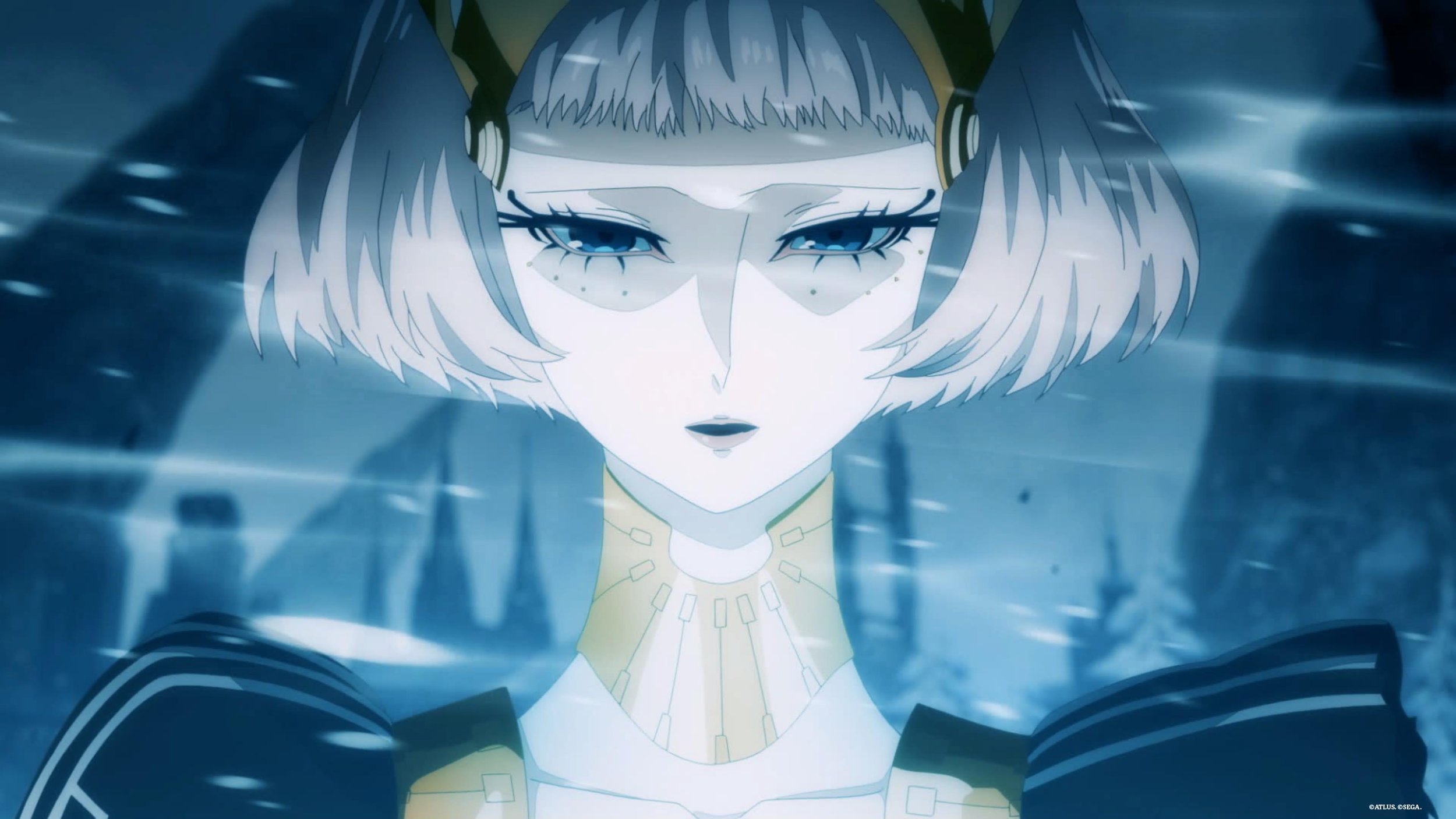
I saw this cutscene a whole bunch of times
When I died it was pretty rare, though: at the ice dragon, a few times; a small handful of times through bad luck against monsters that got first-round advantage on me and my classes were unluckily weak to their attacks; and at the final boss, where I was not particularly upset that the second phase killed me. I did need to take at least a day before I was willing to try again, though, because of how slow getting through the first phase felt. I think it is to the game’s credit that I wiped halfway through a forty minute end boss fight and still came back to finish it the next day. I felt massively overleveled going into the finale, but clearly I wasn’t. I never felt the strong desire for the game to just end because the battles never got tedious—if they had no risk, they could be solved through the much-faster action-style combat. Because it kept me with it through the whole 90 hours, which took me three real-time months, I liked Metaphor slightly more than that other big RPG I played this year.
2. Arzette: the Jewel of Faramore
The CD-i was prohibitively expensive. No one I knew had one, and the price was so high that I never even considered asking to bring one into my house. By 1994 I had a Genesis and an SNES, so I felt pretty spoiled about video games already, but I wanted those impossible Zelda games. I remember pouring over some magazine’s preview at a friend’s house, daydreaming about these two tiny screenshots that looked, in my mind, just like the cartoon. Perhaps they had the world-shaping power of the Zelda comic book that I had read a hundred times!

one of the most impactful stories of my childhood
To me, Wand of Gamelon was Zelda filtered through my imagination and then brought back to the screen (if memory serves, I don’t think I realized Faces of Evil was a separate game). Arzette: The Jewel of Faramore feels like someone gave me a chance to play those cd-i Zelda games as I imagined them to be. Arzette is also super fun to control, the music just absolutely rips, and the cutscenes are stupid in the Zelda cartoon/youtube poop way without being annoying.
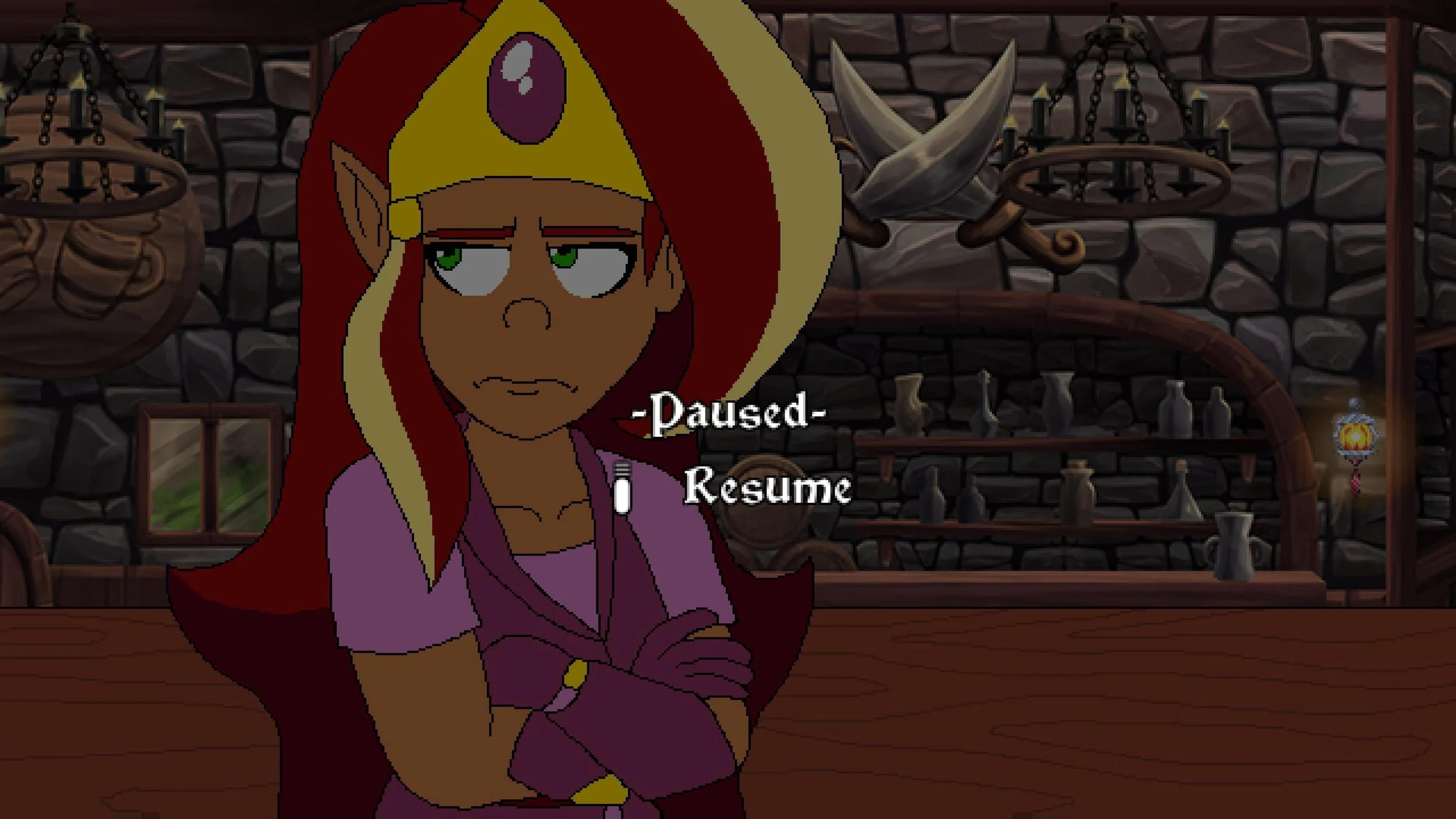
yes all my screenshots have “paused” on them, because shut up.
They are sort of squigglevision-y, like season two of Home Movies quality, and I love it. I know there’s something about the voice acting being just normal people or youtube people or whatever, but they are universally great at intentionally being not great, which is quite hard to do without actually becoming unintentionally not great. I checked on every townsperson after every level because I didn’t mind if they repeated their little clips or not—horse bartender who remained the same most of the game, I’m looking at you. The game also lets you click through them, because the game is nice to you.
Beyond controlling Arzette—who is kind of like a combo of the “well excuuuuse me, princess” version of Link mixed with earned hyper-confidence—which feels good though it looks like it’s going to be stiff and clunky, a visual style that is nostalgically and aesthetically pleasing, and music that is presented in intensely short loops but not grating at all, the actual game design is super rewarding. Example: you get a gun, and it has red blasts for red stuff, then blue blasts for blue stuff, and sometimes (rarely, as the game is quite intentionally easy) it can be a little bit tricky to switch colors on the fly while you’re jumping around. Eventually, though, you upgrade into purple blasts and can just…stop switching, because it works for either color. What a nice way of obviating a (potentially) tedious mechanic you’ve clearly had to master while also making you feel like your character got stronger. I can’t remember if this upgrade was an optional bonus for finishing some sidequests or an inevitability of the storyline, but whatever, I did all the content possible to me. I don’t want to look up specifics for this writing because the sooner I forget the details of Arzette the sooner I can start a new save file and replay this gem. Jewel. Whatever.
I do not think I can glaze this game hard enough. I loved every minute I had my hands on the controller.
would absolutely be my background in the days of my pentium with MMX PC.
Do you need to be in your forties and have unrequited longing for the CD-i? I don’t know, but I can definitely state that this game fulfilled that esoteric want for me. Wrapping something in the aesthetics of an illusory nostalgia seems really challenging, since you’re attempting to recreate an idealization. But Arzette gave me the chance to recapture what my childhood imagination spun up after it was confronted with an impossible desire, and for that, I am forever pleased.
1. Animal well
I did not realize you could change what item you were holding for multiple sessions. I did not realize there was even an item screen for at least my first week. I fully believed that the structure of this game was such that when you picked up a new item, you used it for the area you were in, and when you picked up a different item, the prior one was gone forever, or perhaps to be picked up again if you returned to its zone of influence.. This fundamental mistake—that you can bring items to other parts of the map and use them—kept things contained during my initial time with Animal Well. Otherwise, the sheer density of obtuse mysteries might have felt overwhelming. I felt ready for how wide open the game felt, once I realized my mistake.
Animal Well scratched at something primal in me. Some of my confusion in only touching two buttons (jump and use item) for the first while may have come from my childhood playing CastleQuest on NES. I never owned that game, but a neighbor did, so I only got it in fits and spurts, never made it very far, but always sort of thought about it as peak mysterious videogame vibe. The verb set in that game was limited to jumping, I think, so it’s not completely absurd that I believed Animal Well was the same sort of non-violent labyrinth puzzler.
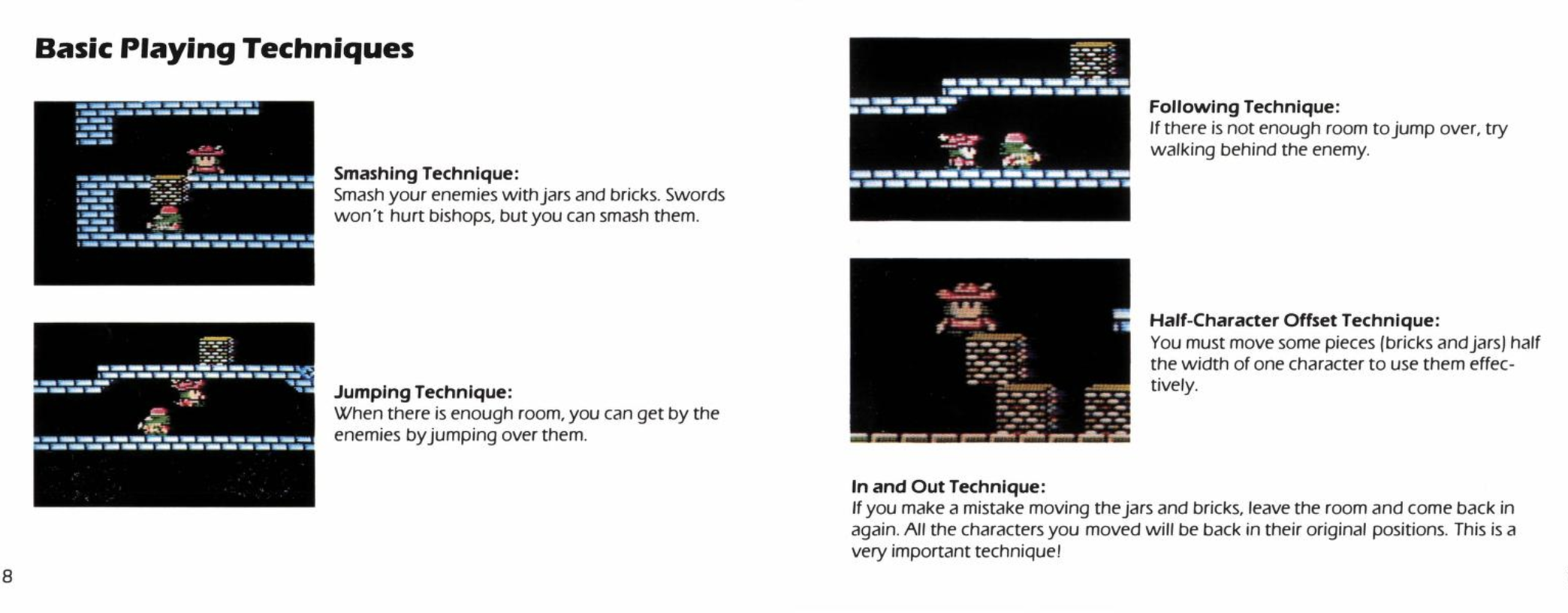
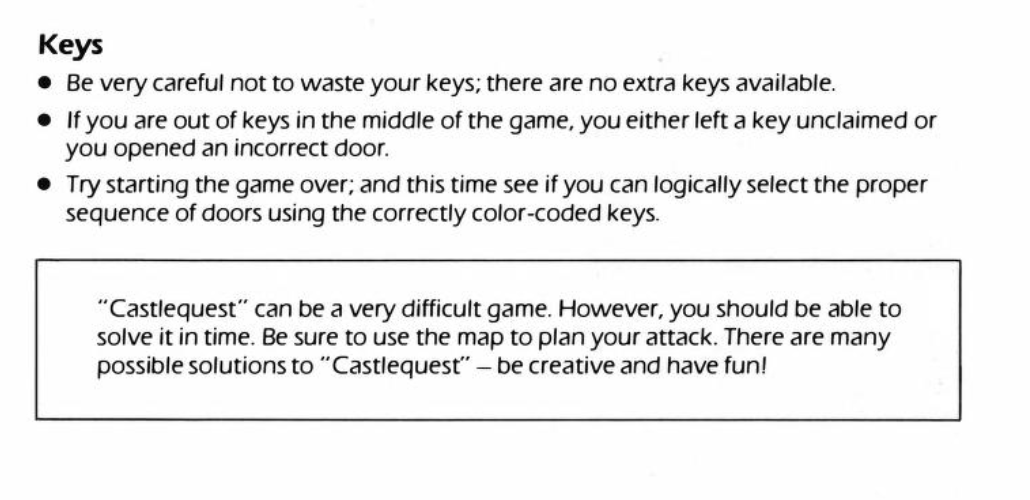
this was my childhood, yet I still like games
Animal Well is compelling in its obliqueness. I didn’t know what was going on for most of my ten hours, but I knew I loved it. I could just move in a direction until I found some movement-based friction point to push against, or clear puzzleroom to solve. Or I could go wander somewhere else if I didn’t like the look of what the game was asking of me. It took me hours to learn the map, but during those hours I didn’t feel like I needed to learn the map—I wasn’t crossing empty space to get to storypoints but instead had something to do anywhere I found myself. The game was infused with play in every moment, no filler to slog through or open-world emptiness to eat up time just to hit the next checkpoint or gate-and-key puzzle. It felt like there were secrets on the way to secrets.
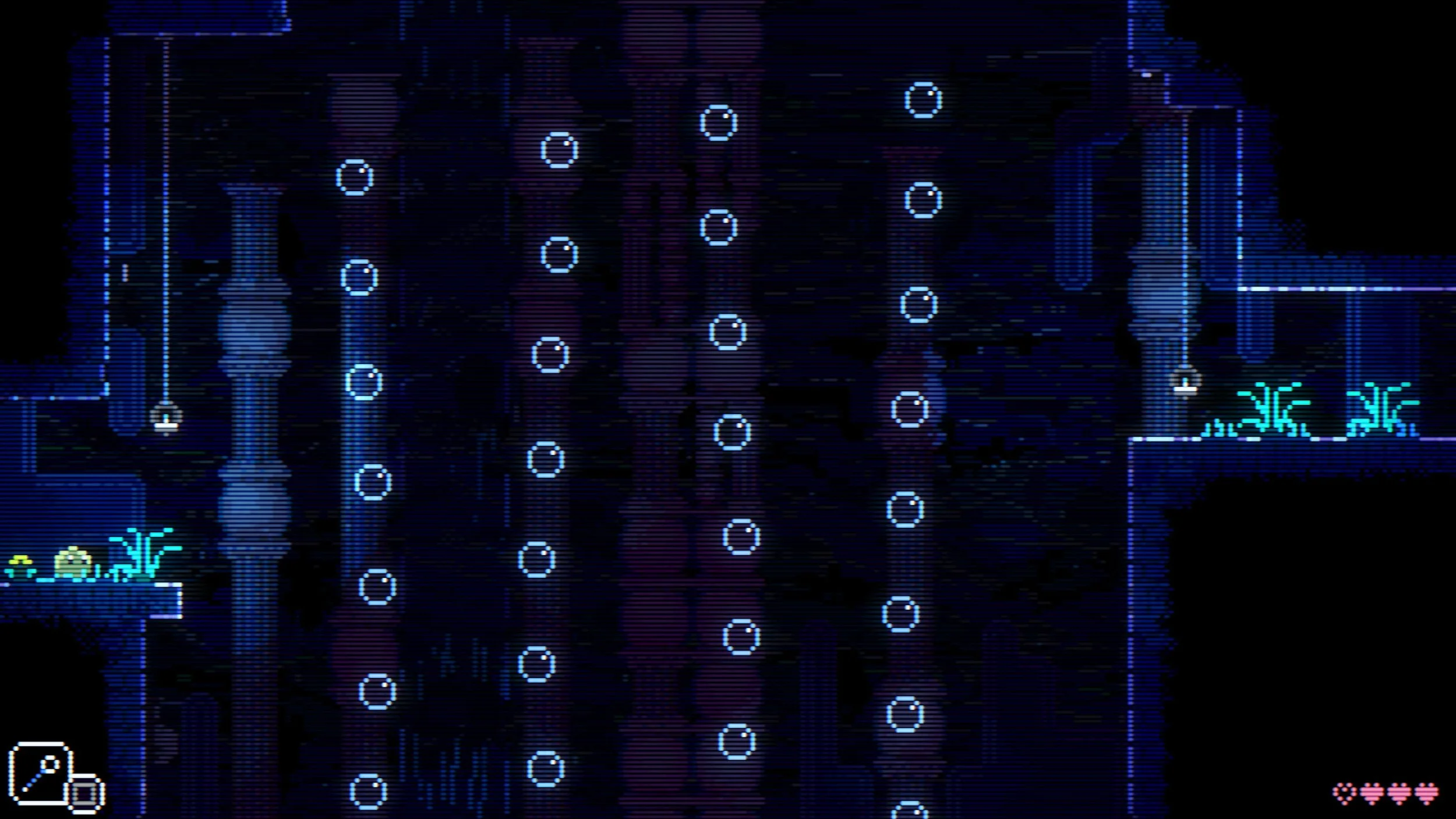
making it across these bubbles changed the game from fun wandering to fun secret hunting
If you weren’t around in the 1980s and have ever wondered how (or why) people found all the burnable bushes or bomb-caves in the original NES Legend of Zelda, it’s because it was fun to simply move around in that world. Finding stuff is cool, but looking for stuff is even more cool. In Animal Well, it took me a while once I had the flute to realize it played different notes depending on what direction your controller was pointing. Then it took me a while to notice that some of the background tiles had input arrows on them. Then it took me a while to realize I could use the flute to follow the pattern and make a song. Then it took me even longer to realize that I could do it in different rooms than where I found the patterns. Do not forget that it also took me kind of a while to know I had the flute, because I didn’t know I had an inventory beyond my visibly-held item.
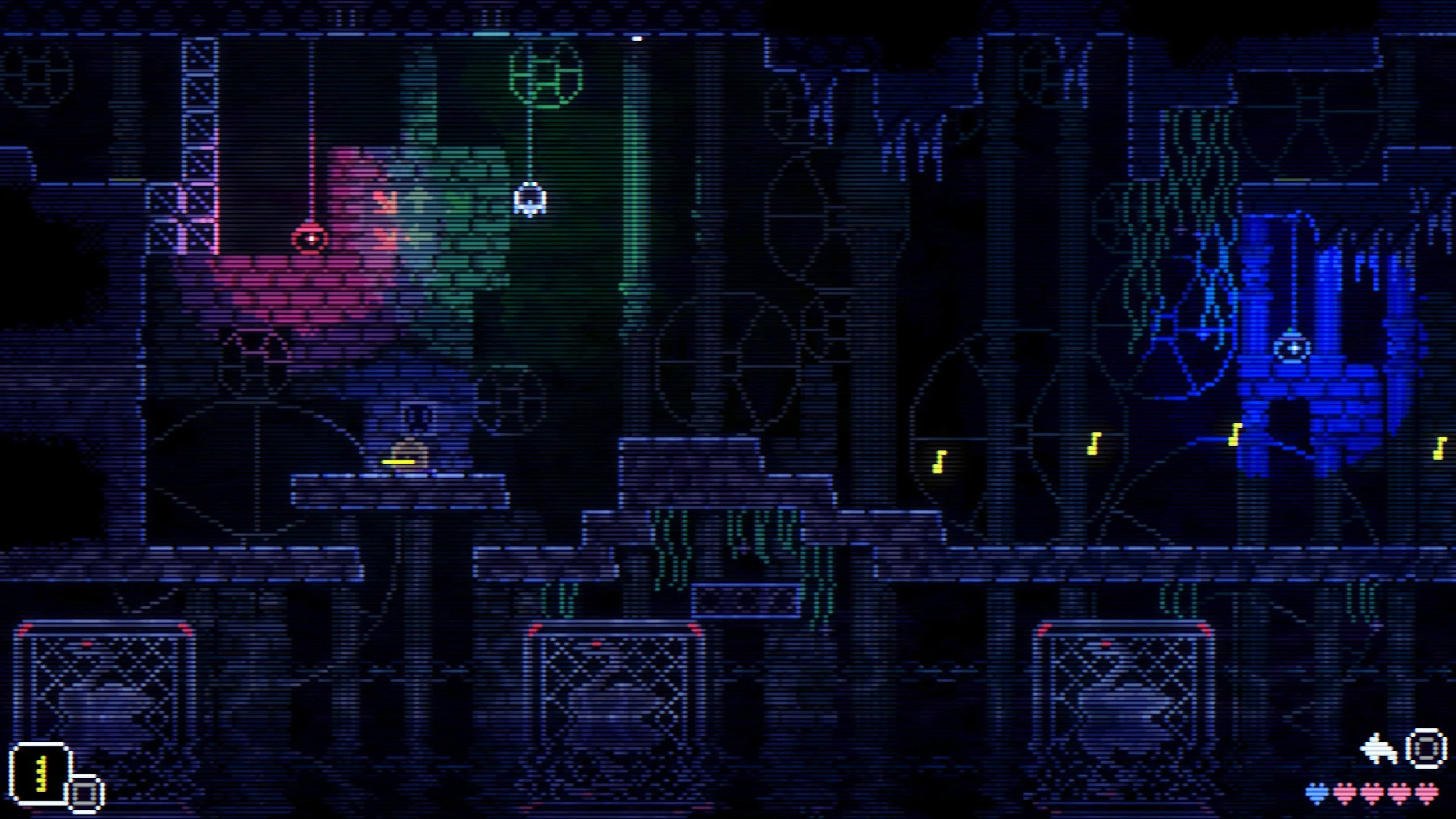
i cannot tell you how cool I felt when I figured out this puzzle
I “beat” Animal Well and kept playing it for a few weeks. It was just fun to be there, to move the little guy, to begin to recognize the areas and find new ways to use old objects. It had the opposite feeling of Tainted Grail, where the possibility of cool things were like accidental consequences of the code interacting in weird ways; Animal Well had my complete trust that anything I was doing was intended and known by the game and developers. Animal Well just felt supremely confident in itself, like it was okay if I missed things, or got confused (and not sicko confident where if you missed a key or used it on the “wrong door” it was restart time, cough cough castlequest cough cough). What I like about video games is how truly unexpected an experience they can be, either from the lucky confluence of hundreds of preprogrammed systems all bashing together in unique ways, or from the intended oddness of what is still, in parts, a a pretty niche medium.
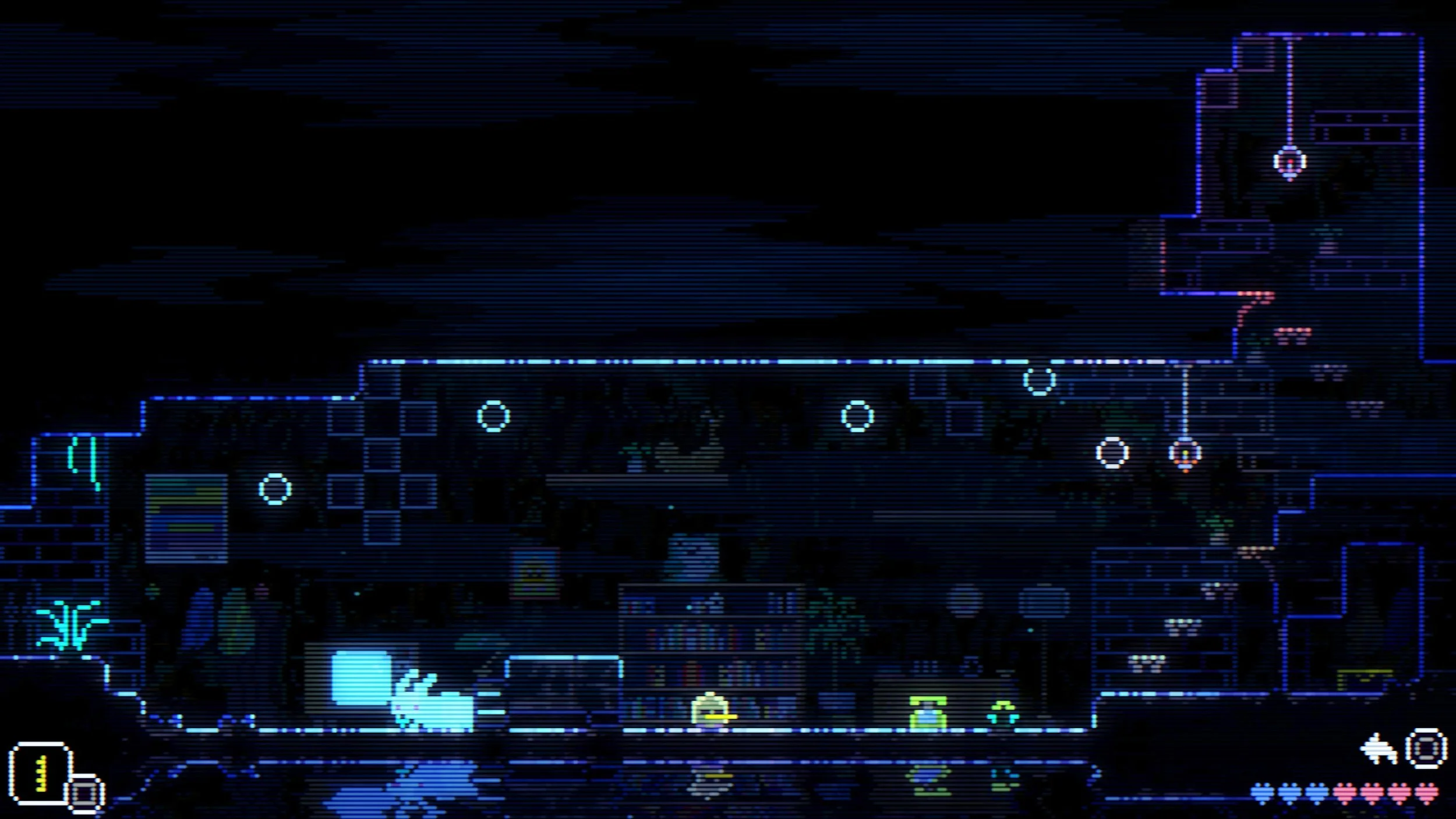
I have even less of an idea what is happening here, but I know I loved the flute
What I said about Arzette is that I loved it enough to be excited to replay it from a new save file, and I think I can recreate most of the excitement I felt playing that game in a year or two. Animal Well, however, is a beast of a different stripe. No matter how many years away it is, I will never be able to drop myself into this game without knowing anything about it again, without being so clueless to its basic form as to not even know it had an item screen. Beyond the fact that months later I can still vividly remember arriving at the ostrich boss first, before I realized there would be bosses, before I knew that the statues showed you what each boss would be, before I knew that the map was roughly correlated into quadrants guarded by each boss. I still remember being chased by the ghost dog for the frisbee, I still remember the first time a dachshund chased me into a tunnel, I still remember there’s a tamogachi somewhere that does something, maybe.
I know there are things I haven’t found. I know there are things I will never find. I don’t believe I can go back to Animal Well. But I also don’t think I need to. It was by far my favorite game I played this year, and likely one of the best video game experiences I’ve had.