
Strange Pictures
book by Uketsu
translation by Jim Rion
Chapter Three of Strange Pictures seems to arbitrarily employ bold text when recapping the known clues about the core crime of that chapter. It didn’t happen in Chapters One or Two. Are they…anagrams? An acrostic? Some other kind of word game I’m unfamiliar with? Even after the book was finished, I never discovered why it happened only in that chapter, nor really why it happened at all. A less enjoyable text would not be given the benefit of such a mystery: instead of off-putting, I accepted it as intentional and kind of spooky.
I do not go in for spooky stuff. But I liked this book! The creepy pictures in Strange Pictures remain too unsettling for me, though, and even after the book is done they still flash unbidden before my eyes. The baby in the Santa hat?
When I asked her why it was dressed like Santa, she said, ‘Because this baby is out Santa.’
It took my a while, but I finally clicked.
It’s because we found out she was pregnant on Christmas Day!”
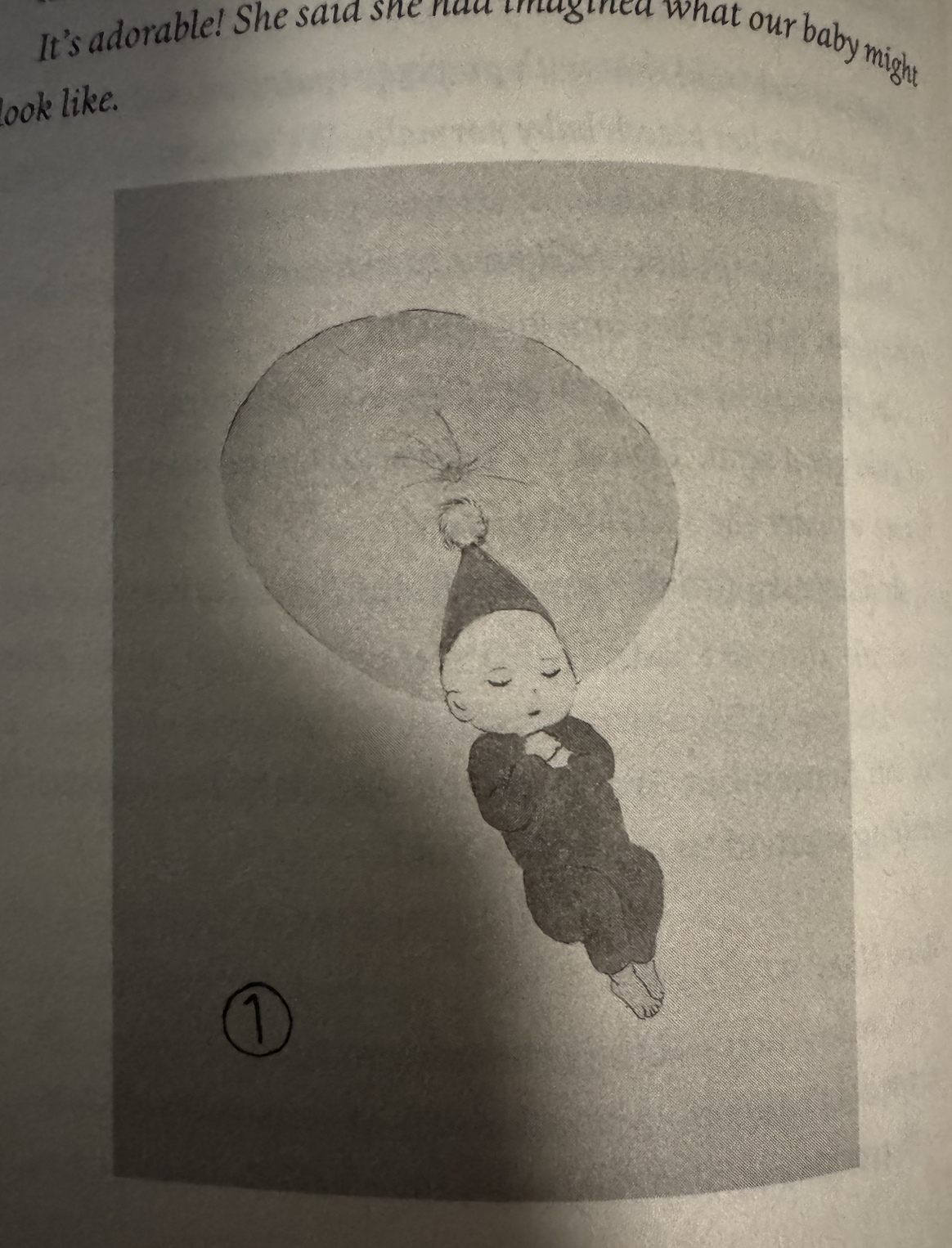
Is…is this Santa?
The Santa section was too far into the text of the book to use my standard amazon.jp アマゾン sample-search to confirm it was a Santa suit in the original Japanese. I didn’t really want to spend too long looking, though, because I cannot stop getting the tingles when I see that photo, after I learned what it truly was. So…translation accepted, I suppose. You can be Santa, little baby.
The plot of Strange Pictures fits together like an ideal mystery novel puzzle, but what really impressed me wasn’t the clever detailing or narrative revelations but the broader pacing and structure. Opening with a short lecture by a psychologist as she deciphers a series of early childhood drawings tees up pictures (strange pictures, wink) as being vital to the story.
Chapter One then opens on some college kids piecing together a mystery from an abandoned blog. I felt safe from the immediacy of danger but also delightfully intrigued by what they were trying to uncover. And when each of the following chapters shifted to a different point of view, I was completely unbalanced. I did not recognize the faint tethers that tie each chapter to the wider story until each section was complete. The power of Strange Pictures is in my belief that the same story told in a different order would not work as well: shuffled chronology is not unique to mystery writing, but deciding when to reveal what is crucial in this book to making each revelation relate to the whole while remaining interesting on its own.
I approach most media with a “mind empty” perspective. I don’t like trying to guess where something it going because I like to be surprised. Strange Pictures does this so well, yet also seems completely comprehensible if you’re looking to solve the puzzle yourself. At least, the overarching puzzle of how each chapter unites to the ones prior seems decodable. The actual puzzles within the pages aren’t presented as homework: No one should be mentally resizing static images observed from the bound pages of a paper book to uncover a mystery that th book witll reveal four pages later. I’m not, anyway.
The mountain range spread out to the west of Mt K—-, so that the setting sun shone from behind the mountains. So, from the eighth station of Mt K—-, the backlight caused the range to look pitch black. In the daytime, when the mountains were lit from above, you would be able ot see details on their slopes. But right now, you couldn’t even tell where one mountain ended and the next began.
Iwata thought back on the picture Miura had drawn.
I really don’t like spooky stuff, and I like murder in my media even less. Killing someone is gross and final and abhorrent to me in a way that causes me to split from a lot of modern entertainment. I do not understand the appeal of true crime podcasts or youtube voyeurism of real horrors or choosing to see anything intentionally violent. I don’t really even watch action movies anymore, and certainly not horror films that leans into graphic depictions. If someone is going to die on-page, I want to be as melodramatic as possible.
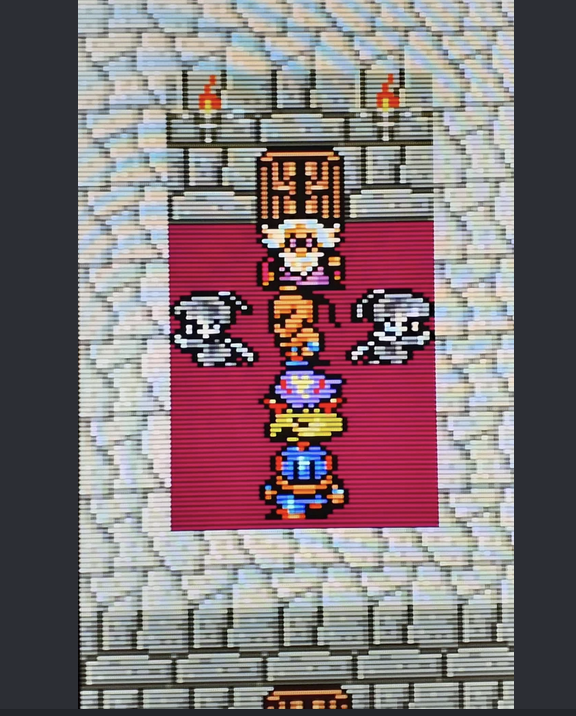
stone by their will
If I’m going to watch someone die on-screen, I want it to be regional-theater stage production-level—a red ribbon unfurling from their clenched fist—so my brain knows the actor is just sort of lying there.
Strange Pictures is therefore up against a lot of my personal resistances to the genre. But, as I said, the book starts with some college kids trying to work through a blog, so the attenuation to any actual threat of physical violence makes it more palatable:
‘Deleting a blog isn’t that unusual. I mean, I deleted my Evangelion analysis blog I kept back in middle school. But the way Raku did it is a little odd. He left the entries from when his wife was alive but deleted the ones about his child….There’s something kind of off there. I can’t figure out his motive.’
By the time there is any actual danger to a point of view character, I was too invested in the book to shy away. The text mercifully fades to black when violence arrives, quickly cutting to a headline reporting on the event rather than lingering on the scene for reasons of prurience.
And that’s what I’ll do, as well:
In 2026 a book written by a mysteriously faceless author works a showcase for how every individual element on a page can be employed to tie a plot together without being tedious or hokey. A review or recap of Strange Pictures cannot capture its potency. Reading it is recommended, even if it will forever alter how you pierce a Santa hat.